
ISSUE 1.4.0
NOSTALGIA SUMMER
contents:
“on neopets” by kesse alexander
interview with lily mccauley
news from shoplifters
artwork by audrey pauer
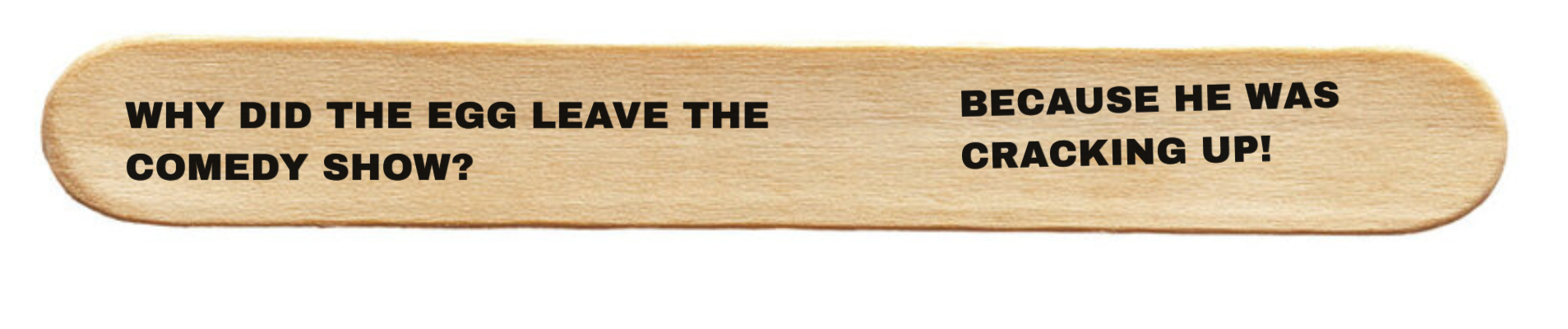
joke of the month by grady mcdonnell
Shoplifters, moonlighters, brigands, bandits, highwaymen, and thugs:
I think about my first few summers all the time.
My most nostalgic seasons were spent in Orange County, California, in a small town located a few ticks above Los Angeles, and a couple of long strides away from Laguna Beach, where my brother Max was born.
Southern California is pretty famously a land of perpetual summer. The temperature very rarely dips below the sixties year-round, even in the middle of winter; and the winters were my favorite, because that time of year was when the local orange groves would yield produce.
Oranges straight off the branch smell like cotton candy, and I used to steal them from my neighbors' yards, unapologetically, just to stuff them in my pockets and walk around in a smaze of sunshiney sweetness.
But my most visceral memories of Golden State weather are of how miserable the summers there could be. You had mudslides, forest fires, and day-to-day unbearable dry heat. Fairer-weather days were spent outside, but when it was too hot, I was in my single-story house's prescribed computer room, playing Neopets.
Neopets, for the uninitiated, was a browser game for kids — browser games in of themselves being a phenomenon that only really had their heyday in a very specific setting and period of time, that being the late nineties to early aughts. The conceit was basically that you created a little guy and took care of it by doing things like feeding it, making it fight other little guys, and reading to it to make it more smarter. Otherwise, you would spend your time playing Flash games to make money, or clicking around the world, or chatting with other users on the forums, but strictly in a family-friendly context.
The number of concurrent Neopets users would always absolutely explode in the summer during the website's peak popularity. The communities that I usually floated around tended to be made up of members of different subcultures, back when subcultures existed, if you're old enough to remember such a time. Neopets was where I first heard of anime, emo music, goths, and nerd culture, as told by older kids on the forums whom I considered to be infinitely cooler and more worldly than myself.
Some things about myself that I consider intrinsic to my identity were founded during my summertimes on Neopets. I love art because I loved drawing Neopets. I love writing because I liked to make up little stories about my Neopets. My formative years were spent on the early Internet, like a lot of people my age, in these weird little third spaces carved out for kids that just don't exist as they were anymore.
One of the things about Neopets that I loved the most were its secrets.
As a browser game, there were a couple of locations that you could sometimes only access by metagaming and typing in a URL that you had memorized into your address bar. These were places like the invisible-on-the-map Hidden Tower, where you could purchase prohibitively expensive rare items, and Jelly World, which was a secret map where everything was, believe it or not, made of jelly. The Neopets staff, in character, would discourage users from investigating these conspiracies, which made arguing about their validity on the forums with other intrepid young detectives even more fun.
There's so much mystique to the world when you're little, no matter where you go. Internet or otherwise.
So it's very strange to return to Neopets as an adult, as I do, annually, every summer. It's still there. It was purchased around 2008 by Viacom and completely overhauled, and was then sold to a children's software company, and then was bought again pretty recently by a fan of the original game whose mission was to recapture whatever essence made it so that people my age think of it so fondly.
But the real folly of the new owner's mission is the fact that nostalgia, by definition, can't be emulated. It can't be recaptured, or captured at all to begin with. It can't be bottled and sold, because it's the soul of something that you can never return to.
There aren't websites for kids anymore. Neopets is mostly populated by, I'm fairly certain, around a hundred thousand active users who are all adults who played the game when they themselves were children. There isn't mystery anymore; you can look up guides on third-party websites instead of trusting what you heard from a stranger on a forum and figuring it out for yourself. The Flash games you'd play to win money don't work these days, because Adobe
Flash was discontinued. There are long-beloved worlds on the map that, apparently for plot reasons, have been reduced to ruins, and I think that framing this as a metaphor for the website's present-day state would be a little bit of an insult to your intelligence as a reader.
But still, in that quiet space between bright, colorful login screens welcoming your return, and dead-silent forums, I've learned that some things don't fade. They change shape. Neopets isn't gone. The pets I created back when I lived in California more than twenty years ago are still around, if a little dusty. And even though I can't go back, returning every summer might not be about reliving my childhood.
Growing up doesn't erase joy. Loving something that no longer exists is its own kind of keeping alive.
Your sister,
Kesse
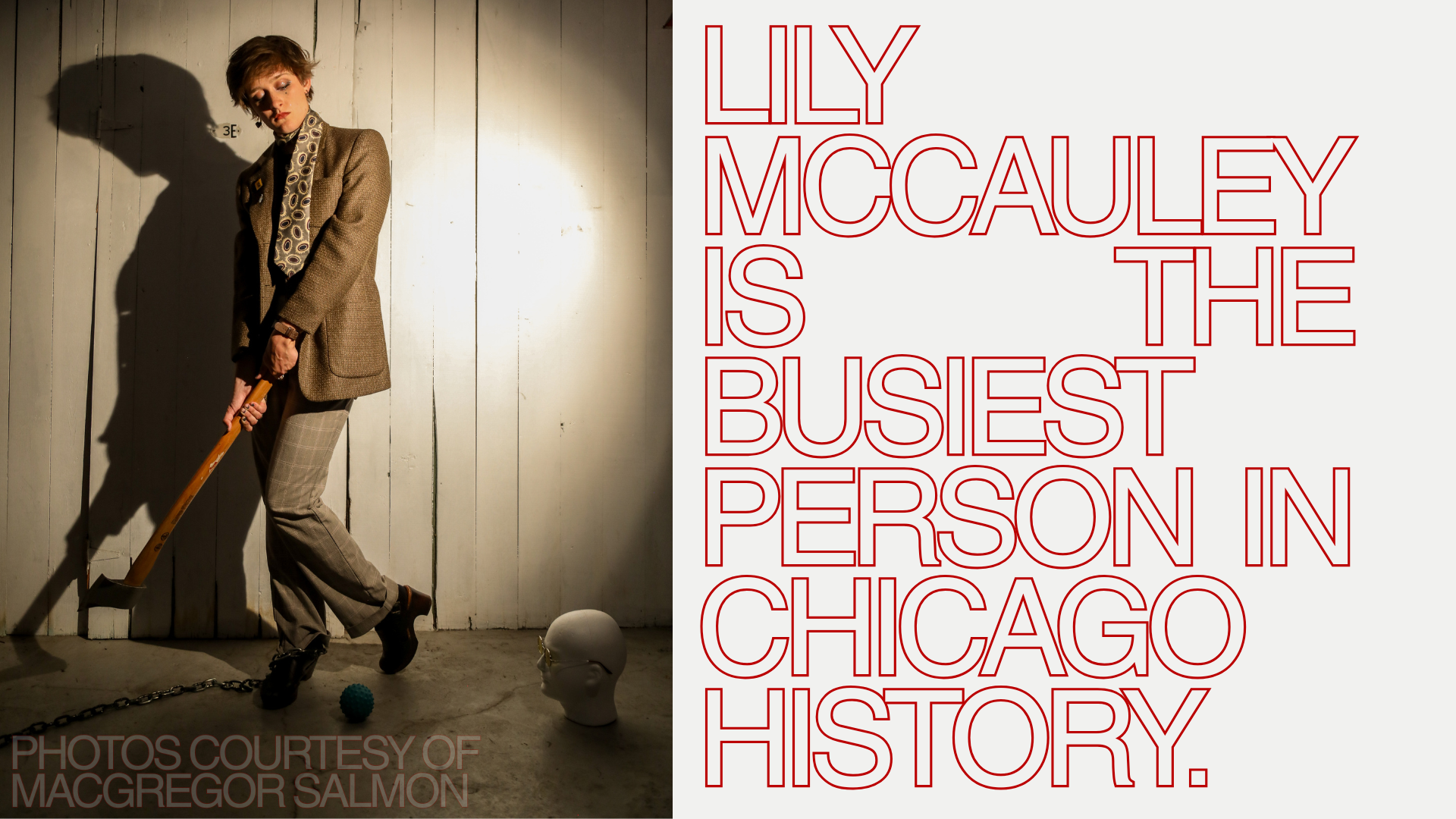
…hops into our Zoom room, bright and early. She is planted on her friend’s stoop in Chicago, making time, taking our call, and planning for world domination. It’s a beautiful day.
MAX: Lily, how are you feeling about the state of the world right now? Jumping in with the big ones, okay! Yeah, just everything going on—How we feeling? I mean, not great about it—there’s a lot of things that give me hope on the small scale. Community-level things in different places. Writ large, I feel very…scared. I think that’s the right word. It’s more complicated than that, but it’s somewhere between fear, disgust, and rage; I think that’s the primary feeling of being alive in the modern times that we’re in. There’s still things that keep me getting out of bed in the morning.

Lily McCauley is what one might call a master-of-all-trades. For the past few years, she has dominated Chicago youth’s independent filmmaking with pieces such as Patron Saint Buffalo Bill—an experimental short that reclaims and reexamines The Silence of the Lambs’ central antagonist—and her upcoming feature film, The Woodcutter and the Weaver.
MAX: Do you feel like your creative work is one of those big pillars in your life right now, keeping you sane? I think so. Something that helps me is feeling like I’m doing something that has a purpose. I drive a lot of meaning out of my own creative work, and the fact that it can have some kind of impact on people, or be of service to them in ways…that keeps me motivated. It’s also a good way to exercise a lot of the things you’re feeling or the thoughts you’re having. Try to communicate those things to people in the hopes that things can change through the work and its interpretation. But it is a more indirect pathway to change, I think. It alone is not enough.
I’ve been supplementing it more with things that are actually more immediately tangible. I think creative work can have a bit of a delay problem.
GRADY: Like delayed gratification? Yeah. To be clear: I’m not against delayed gratification. We have way too much instant gratification in the way we’ve structured the world, and that’s a big problem. But I also think the crises of the modern moment seem to kind of call for a little bit more immediacy than making a feature film can provide. I can spend three or four years working on a project for it to maybe get into a festival and maybe be seen by some hundred people.
That alone can’t be everything I do to try and change the world, because if it was just that, it wouldn’t have a tangible enough impact in the time or scale that matters.
Maybe that’s focusing on the short term. I do think in the long term, [creative endeavors] still have the potential to ripple out. I do believe that it’s not just about the time you’re living in, but the impact you’re leaving on what comes next. So it has a place and a meaning, but I think it also has to know its place, and know that it is only a part of life and living and putting up a fight.
GRADY: That being said, I’m super interested in the creative stuff that you’re doing, because I feel like you’re maybe one of the busiest people that I know. I’m very interested in The Woodcutter & The Weaver. You’re directing this movie, and you wrote it too? Yes, I co-wrote that movie with Cleo Shine, who was the lead actor in it as well. She acted in a short film that I’d done previously, one that I’d kind of written for her, and in talking about the concept for [The Woodcutter & The Weaver], I just found that we were on the same page. Then we were like: “Alright, let’s tackle it together.”
GRADY: Can you tell us how you came to this idea, or what inspired it? I felt for a little bit that I was going crazy because I kept being drawn to these random things and having these random images and whatnot pop into my head. I can’t really explain it. I’m gonna fully steal an idea [from a mutual friend and fellow artist, Anna Hutchins].
She described her own process of getting inspiration with the idea that there’s an antenna sticking out of her head that catches stay frequencies. When you catch one, you have to spend a bunch of time tuning it and trying to get the full thought out. It’s just a matter of catching things as they flow through the air.
I really, really like that way of framing it, because it fits so well with the way I experienced Woodcutter especially. I had finished this short film, The Sliver of Light Under Your Door. And when you finish a project, you kind of enter into this weird, nebulous, empty space. I was feeling a lot of things at the time about the environment, intimacy, and blah-blah-blah—the things the film tends to center itself around. I never really had a definition for anything I was feeling.
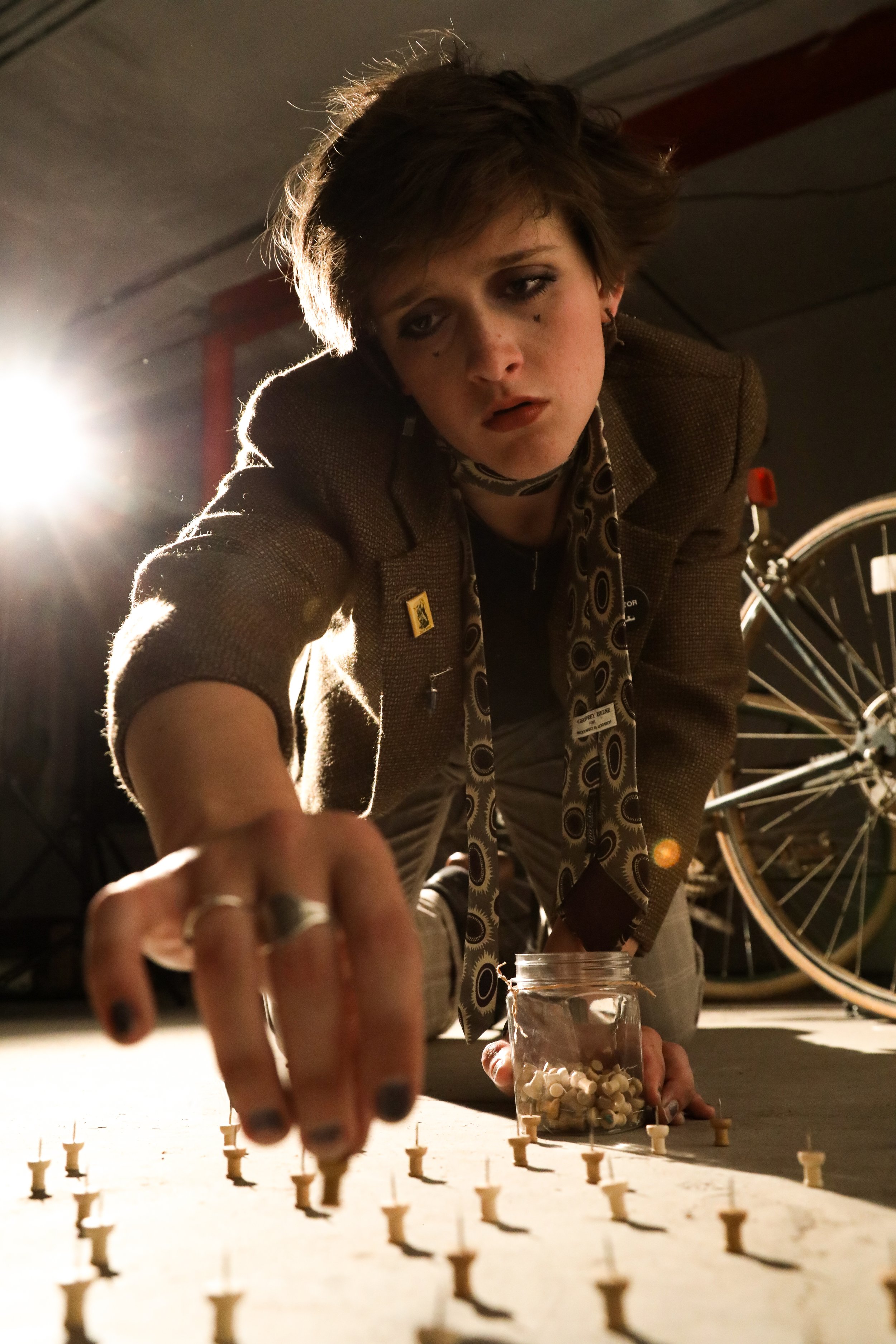
It eventually came in tiny cuts. I was taking a sculpture class at the time and I became obsessed with Magdalena Abakanowicz’s Abakans, these very large woven pieces. And then I got to see Mitski in concert and fell into such a rabbit hole for The Land Is Inhospitable and So Are We. I was fixated on this image of a farmhouse in the dead of March with an ominous light pouring out; this idea that it could be some kind of transformation. It was a slow realization process until I’d read something that kind of equated certain aspects of masculinity to the human desire to control nature. There was a larger conversation about our relationship to nature as one of control and dominance, and how that might mirror patriarchal dominance. It crystallized something in my head. Plot notwithstanding, the film is about being faced with the unknown of vast radical change, and trying to hold onto something that is steady and understood as to exert power over it.
It’s a sentiment tied to the main subject: a relationship. I think that [The Woodcutter & The Weaver] is about marriage as much as it’s about anything else. It’s a story of two people trying to understand how they change together rather than separately.
Finding a way forward requires a leap of faith into each other’s arms, but at the same time, it is a leap of faith in the face of vast change and the unmooring of your world. These things are very applicable as we are staring down the barrel of climate collapse and all these things that really do threaten what we are and how we define ourselves in relation to the world.
Lily takes a breather and smiles. I don’t know if that really describes the plot of it. It’s about this couple who get engaged, and then the world ends because of this mysterious disease that causes people to mutate into these kinds of floral and fungal forms. One of these people is infected with this touch-borne disease, and the other is trying to find a way to solve it, all while the person who is infected comes to terms with it as more of a transformation than a dying. There’s a rift in their relationship, and they have to find a way to communicate with each other in spite of this disease that prohibits them from having contact with one another.
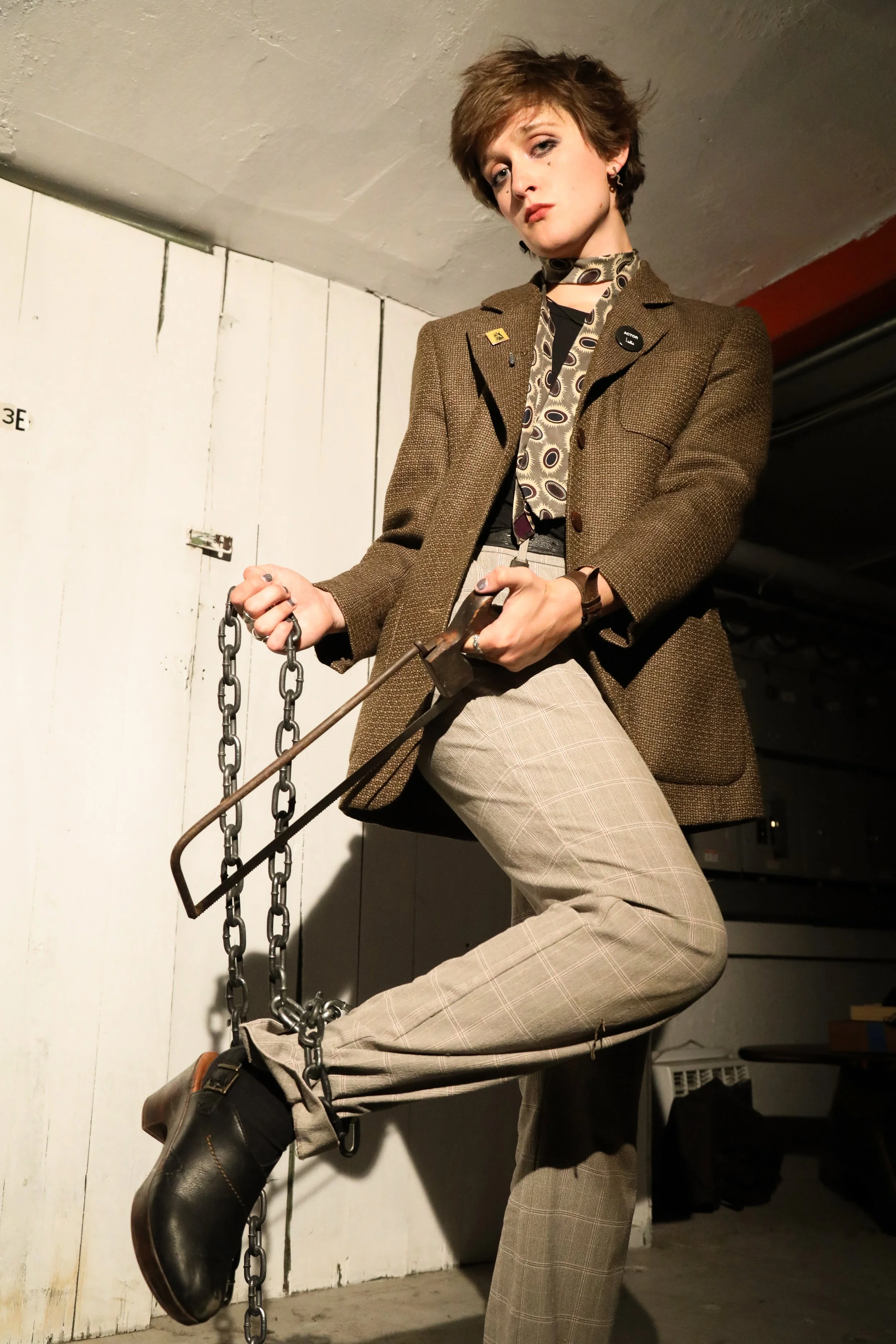
GRADY: In our last interview we spoke to Arie Champney, and we spoke briefly about people using art to talk about themselves rather than the world. I love that you and Cleo are trying to tackle an idea larger than yourself. Yeah, no, I think there’s definitely a lot of that. You can definitely feel my influence on it. I mean, to put it in very self-disparaging terms: it reads as being written by a dyke afraid of intimacy! But I think that everything you make is going to have your fingerprints on it. And that’s good—it’s real and honest, and that honesty is something that people will pick up on. If you’re hiding from something, your audience will find it in your work and realize. People know how to sniff that out, we’re social creatures. If you can be honest and vulnerable in your work but make it about the audience—that’s when it’s at its best.
Art is a service in a semi-religious sense. You’re attempting to reach into both yourself and your perspective to help them explain or navigate something that they previously couldn’t. You’re doing the work in bringing something from somewhere nebulous in the collective unconscious, pulling it into concrete terms to give somebody the tools they need to define it.
MAX: This all makes me think of the areas of art you’ve been attached to. You’ve mentioned sculpture, writing, and we’ll throw out ‘generally’ filmmaking. I’m curious about how you might introduce yourself in a creative space. Do you have a go-to? Or is it just like, “I’m an artist.”I think the work you do in other mediums reinforces the work you do in the primary medium or whatever. So I used to just go with “I’m an artist,” but I was told secondhand about something John Waters said in a Q&A when someone introduced themselves as an artist.
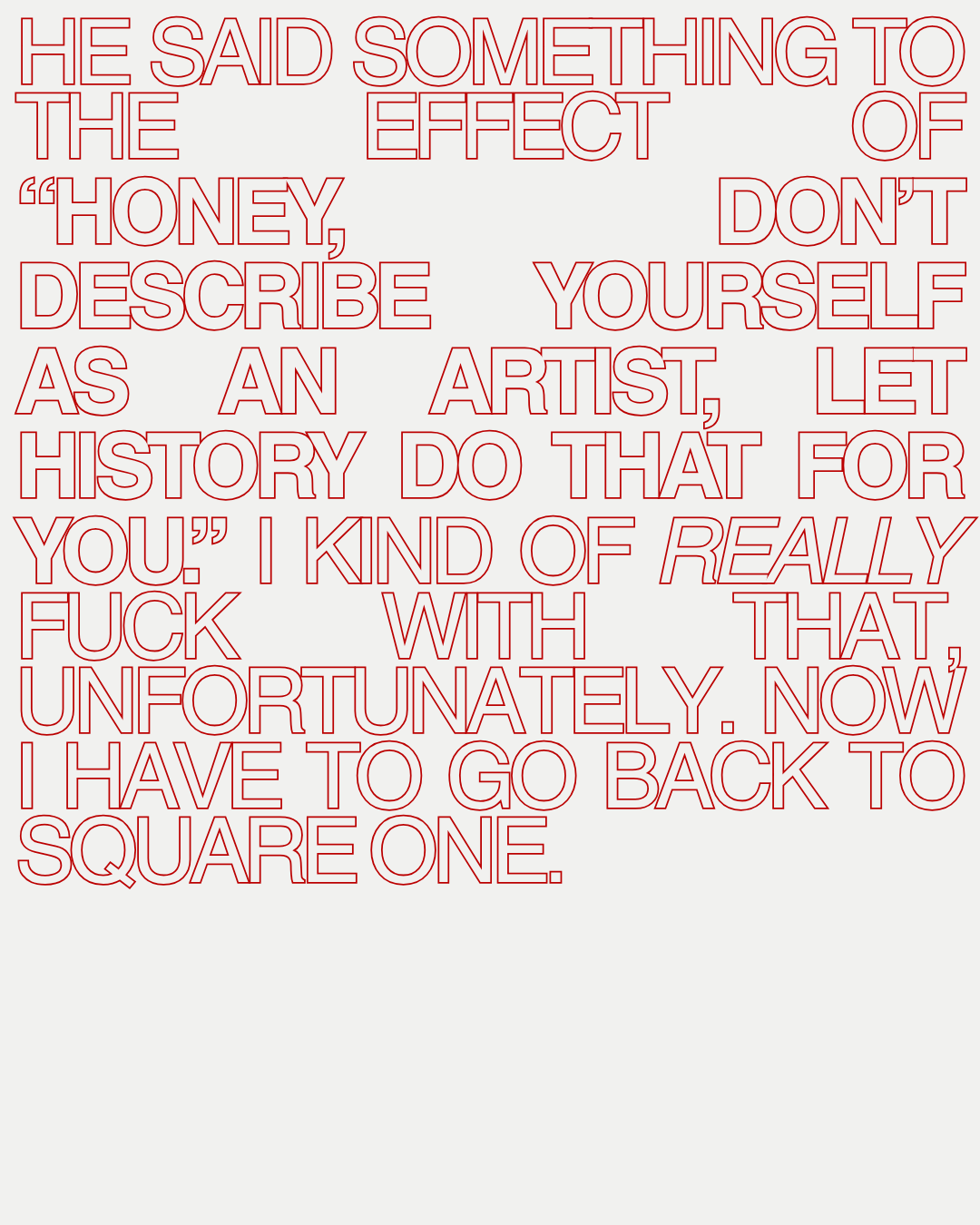
LILY MCCAULEY ON WHAT SHE’S UP TO:
I’m always keeping busy trying to support other projects—producing or trying to do some art department work for a film that [writer-director Eli Buie] is working on.
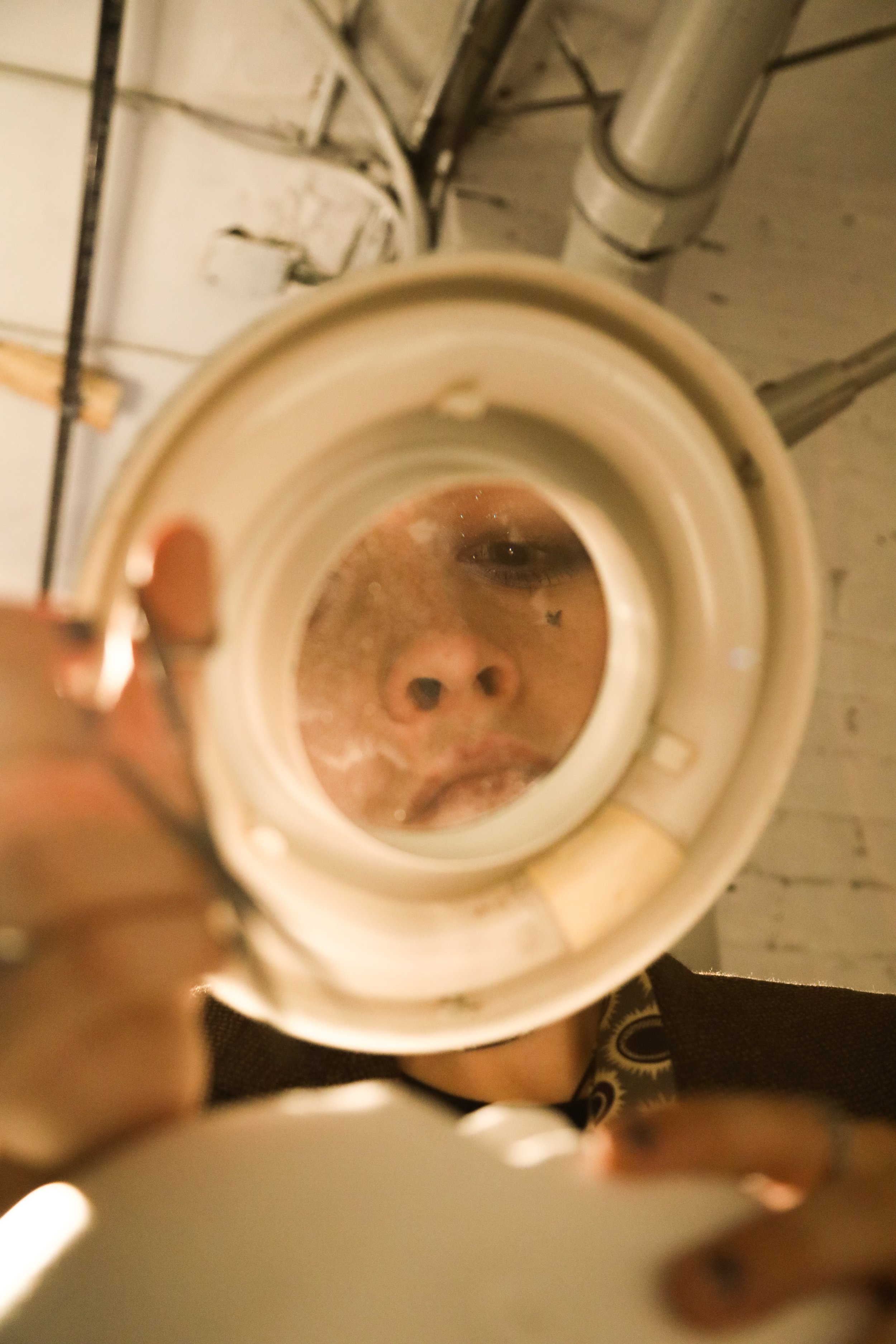
LILY MCCAULEY ON HER NEXT PROJECTS:
I thought that the logistics of making a feature film weren’t hard enough, so now I’m making it a road movie. I’m writing that with a dear friend and longtime collaborator Al Freeman. But, y’know, that’s gonna be years in the making. In the meantime, honestly, I’m trying to make short things and take myself a little less seriously. Which is funny because I just talked about art as religion.
LILY MCCAULEY ON TAKING HERSELF SERIOUSLY:
I think it’s good to take the work seriously and take your art seriously--you shouldn’t half-ass things. My dad raised me to always “full-ass” things. That was the way he put it. Well, the way he still puts it. He’s not dead.
I think the [short films] I’m drawn to making at this current moment are a little, frankly, stupider.
LILY MCCAULEY ON MORE OF HER NEXT PROJECTS:
I’m creating an advocacy campaign to rename the Chicago Cubs to the Chicago Whales. That’s what they used to be in 1911.
LILY MCCAULEY ON OUR RAPID FIRE QUESTIONS:
GRADY: What are you going to have for breakfast, or what did you have for breakfast? The answer was going to be a granola bar, but I’m probably going to make an egg. I’m going to make a fried egg on bread if I have toast--or a fried egg on toast if I have bread. If I don’t have bread I’ll make an omelette.
MAX: What’s a toy you always wanted when you were a kid, but never got? LEGO Death Star. I always wanted to build that thing. Right answer--wait, you wanted to throw it? No, no, I wanted to build it. I was very neurotic, if I built that then threw it I would’ve had a full breakdown. I was a neurotic child.
GRADY: If you were given the correct tools, how long could you last in space?If I were given the right tools, I think I could make it about a year and a half. Then I think I’d lose my mind, and maybe I’d live another three months but those three months would hardly count as living, then I’d probably do something stupid and manic and crash the ship. Quick follow up--if someone told you today that you could go to space, would you? Even if it's like a Katy Perry situation? Honestly, no. Partly because of the horrible economy of space travel being filled by fascists and billionaires, but also partly because I don’t feel the need to burn a lot of fuel to go to space. It would be very cool, but I’m very content with my life on Earth. I want to be active in choosing this planet and choosing where I live. I don’t feel the need to run from it.
MAX: Do you have a favorite song right now?Ah, I--fuck, that’s a really good question--I recently heard, for the first time in years, Dog Days Are Over by Florence and The Machine. That’s a classic!I’ve been on a 2000s millennial kick, I don’t know what’s happening to me. Stomp clap. Lily bursts out laughing. Yeah, I’ve been on my stomp clap bullshit. I’m watching all these Miranda July films, I’m acting like the recession didn’t happen.
MAX: Last question--is there anything you wish we asked you--
Lily’s Zoom screen goes dark. She lags out.
GRADY: She’s gone…
MAX: Lily?
GRADY: NO, NO, NO, LILY!
We continue over voice memos later in the day.
MAX: Are there any questions you wish we had asked you, or anything you want to ask us? What was the last movie you watched--only because last night I’d watched Puppy Girl (2025) by Henry Hanson. I’m obsessed with it; I can already tell I’m not gonna shut up about it. I’m very obsessed with this wave of DIY trans films happening in general. There’s also Dog Movie (2023) by Henry Hanson and Castration Movie Anthology i. Traps (2024) by Louise Weard. And then, for a question I want to ask you guys--what is your go-to road trip snack. Give me a sweet and a salty, then a drink. The whole trifecta…
GRADY: My go-to road trip snack is cheese wrapped in meat. You stop in a gas station and get a cheese stick wrapped in a special kind of meat. It’s really good when you’re starving. But I’ll also go with a classic Trolli Gummy Worms and a Diet Coke, or Red Bull.
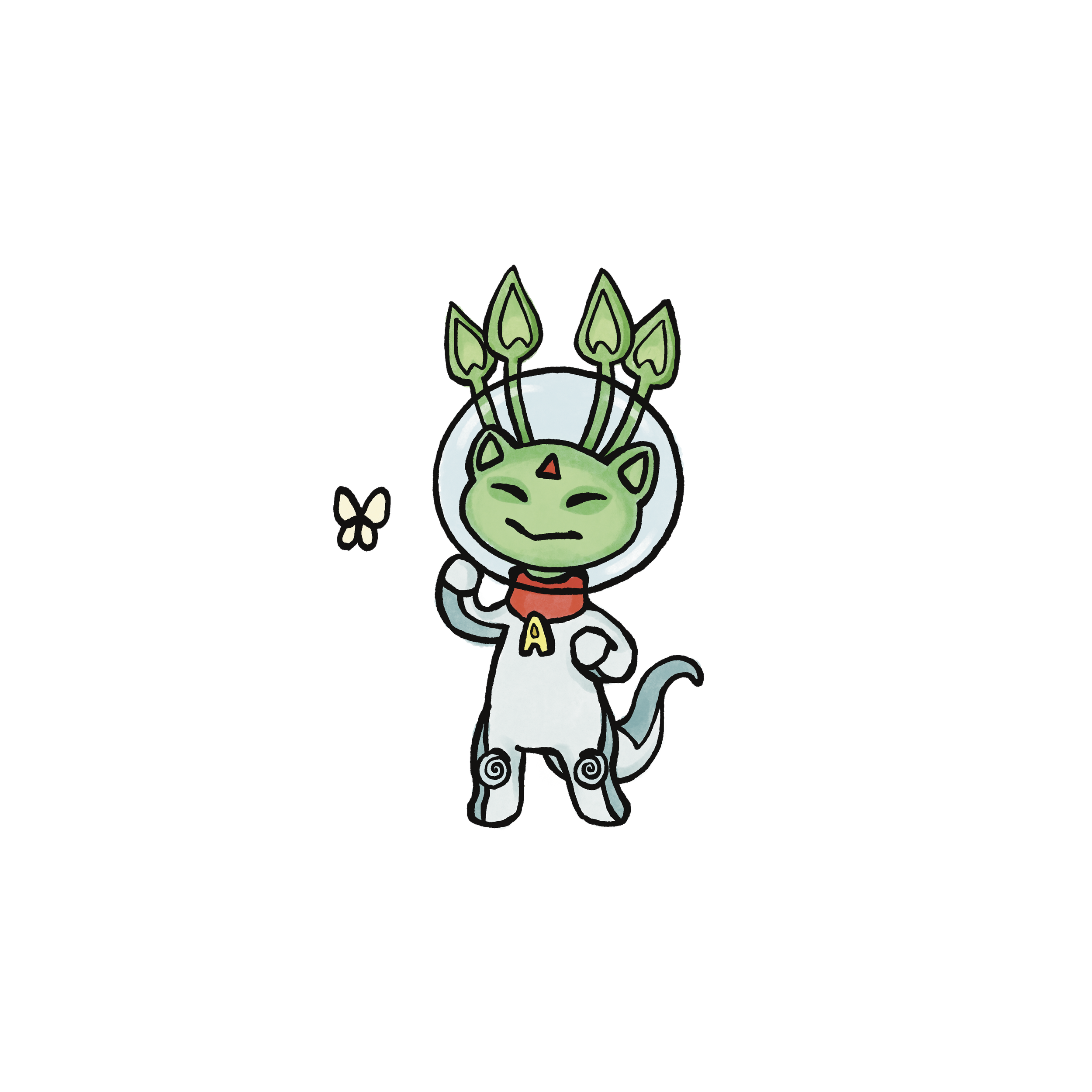
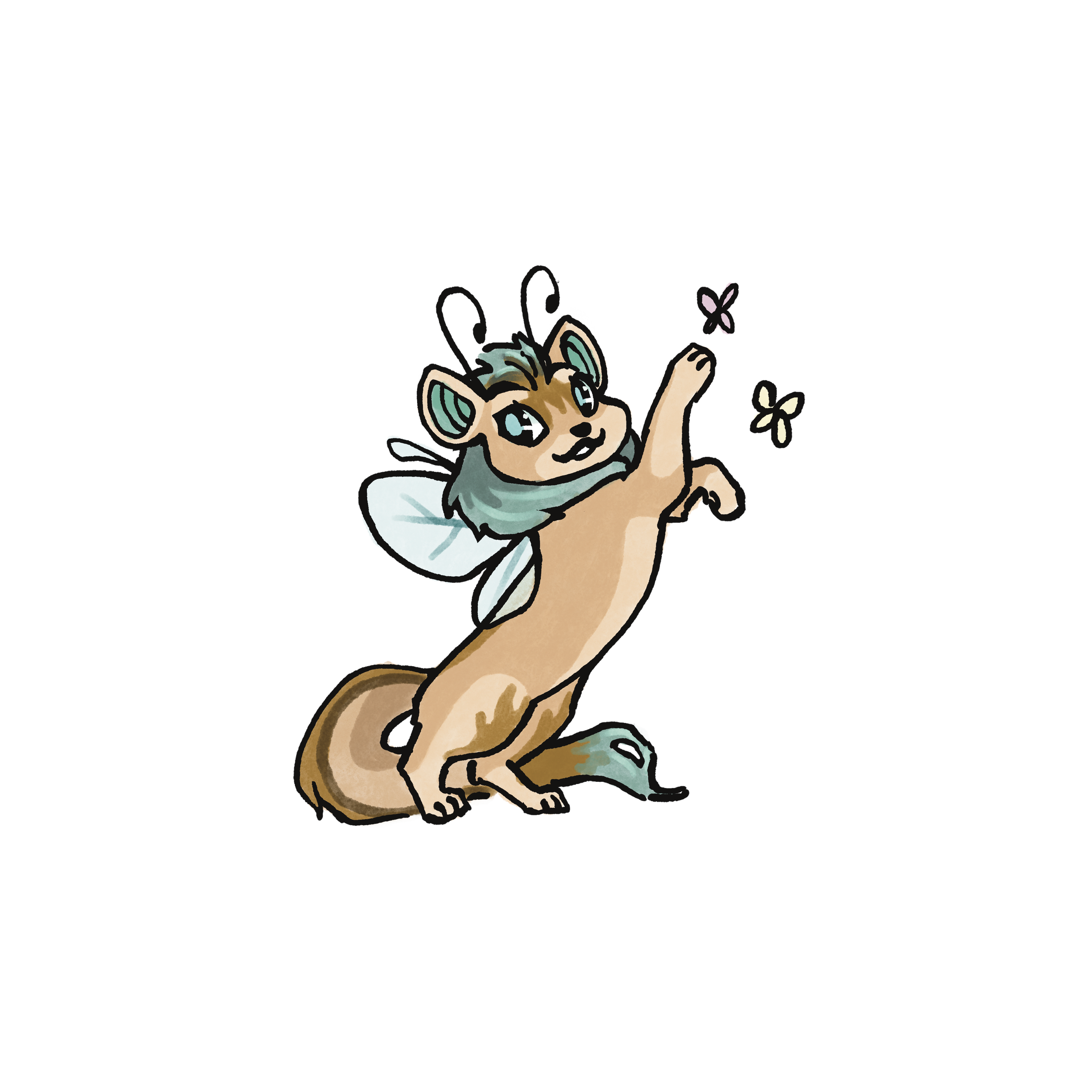
…and if you guys had to design a Shoplifters mascot, what would it be? What would it look like, and why?
GRADY: It’s interesting that you ask that. We’re cooking that up, actually.
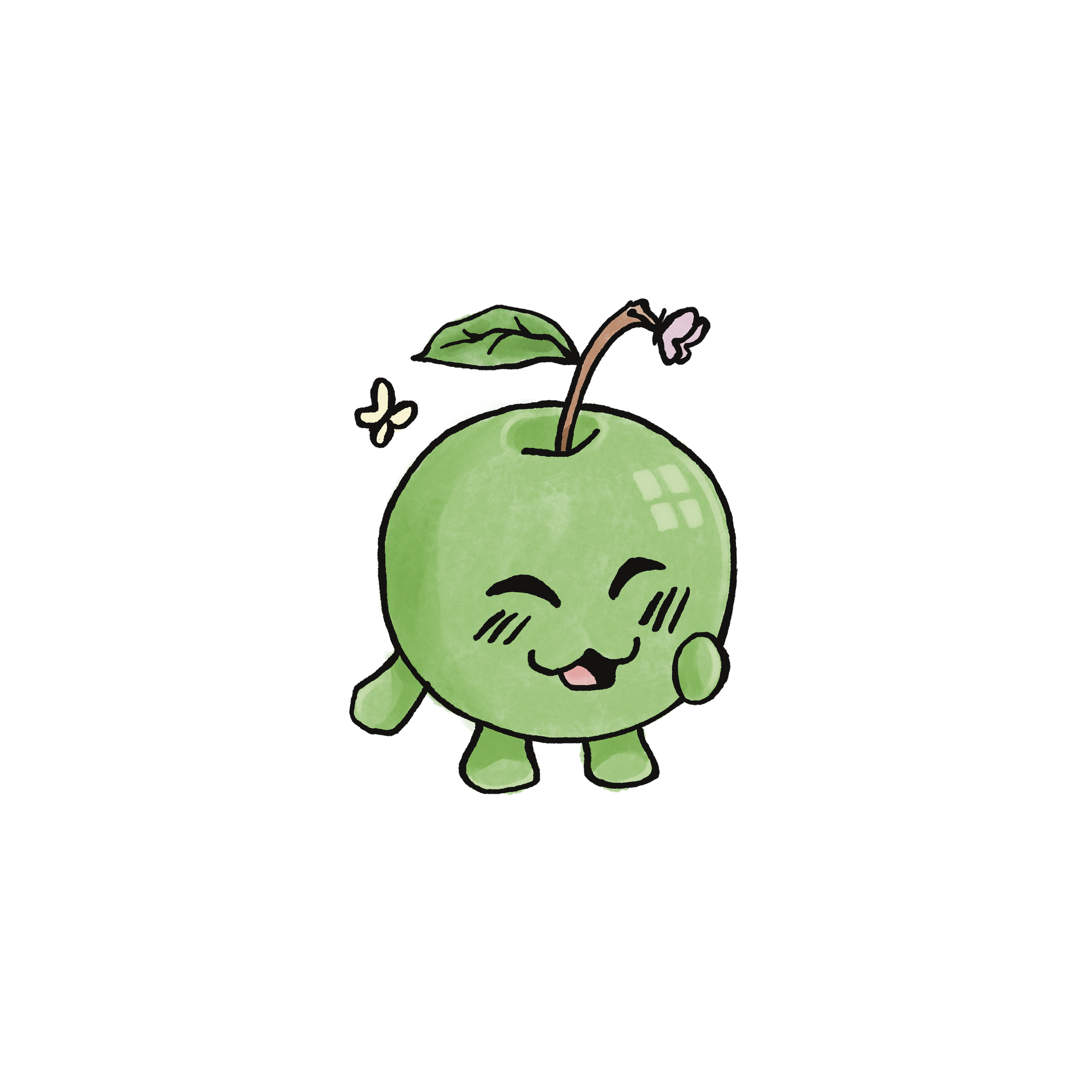
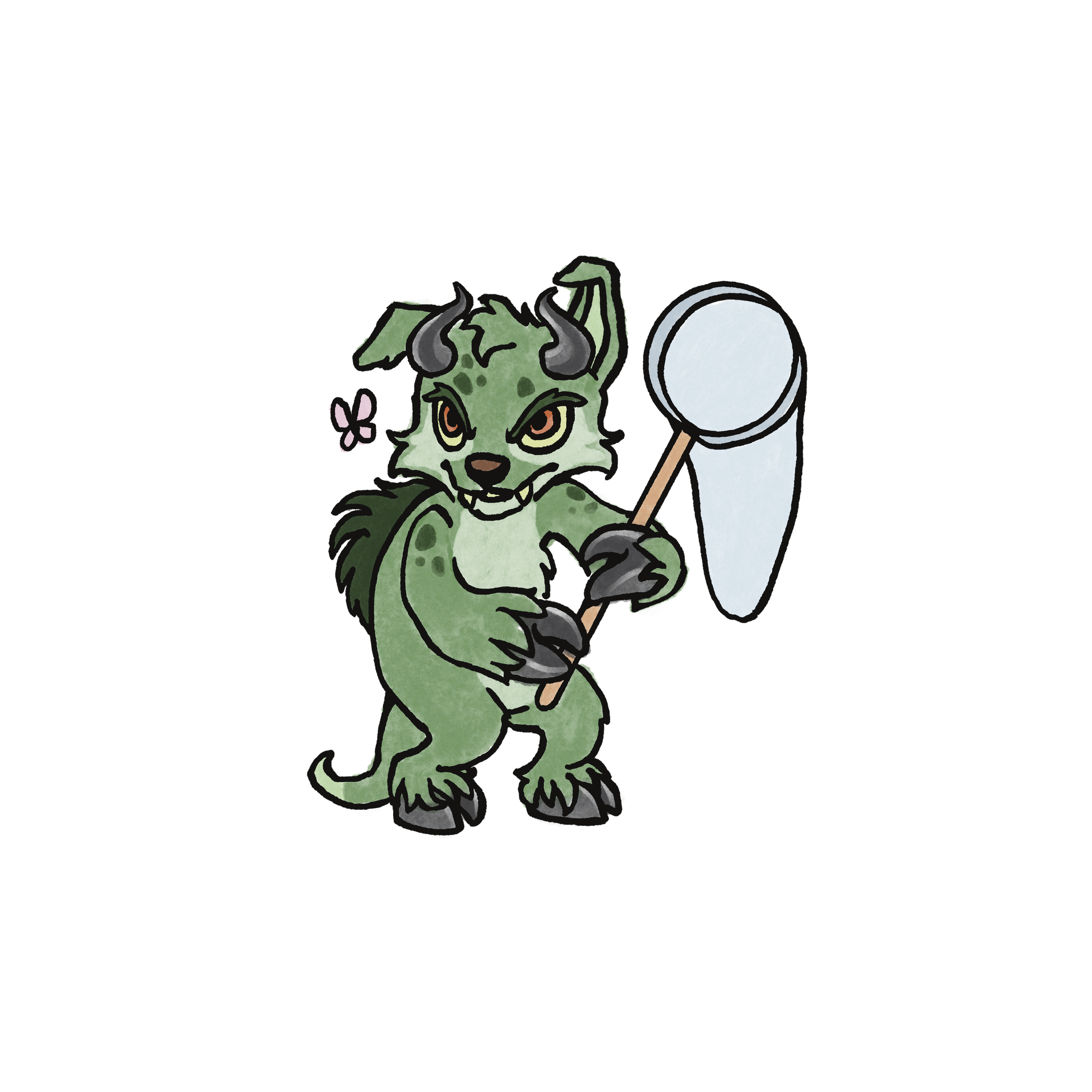
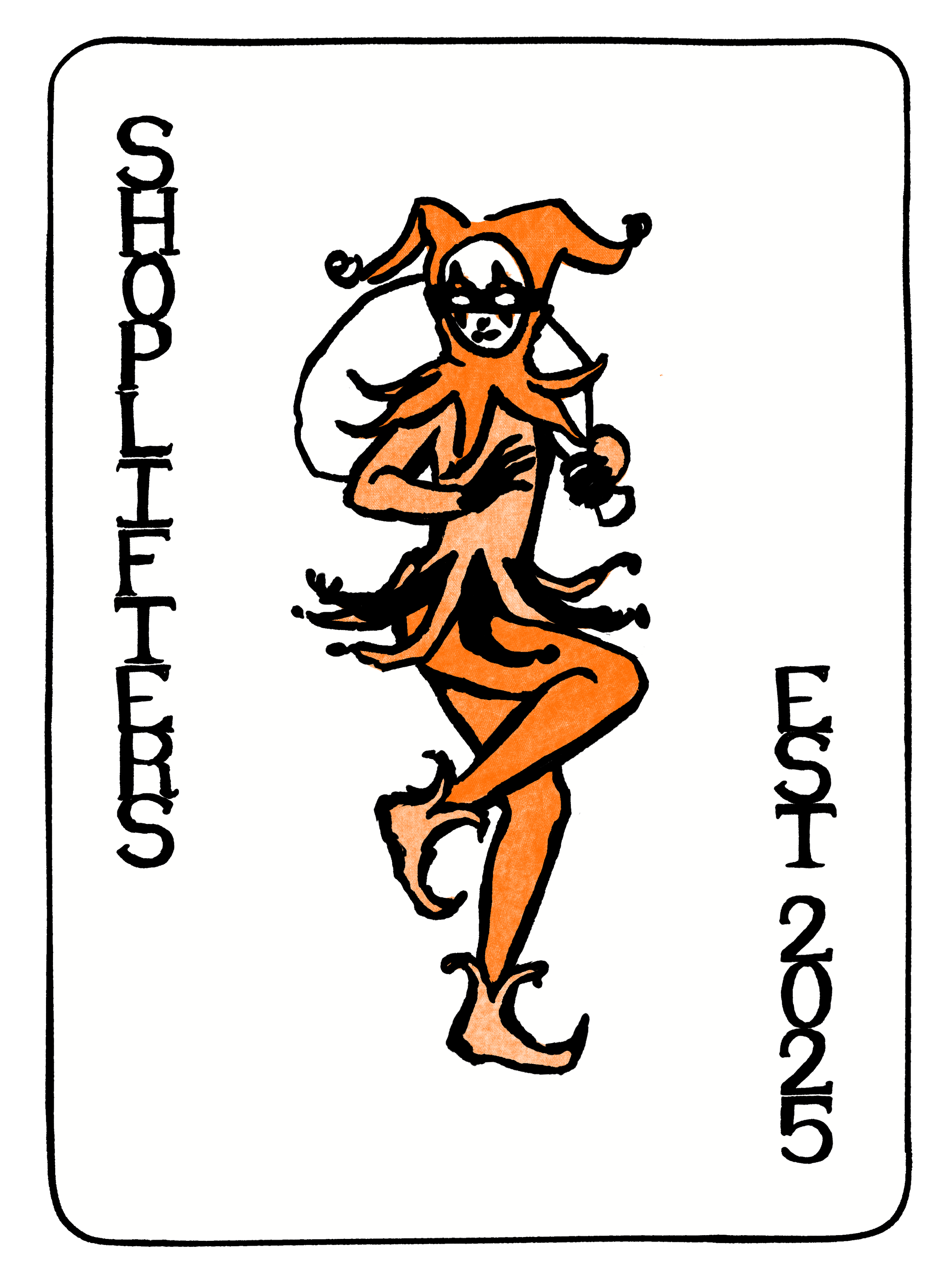
You can actually find that mascot for yourself towards the end of this SHOPLIFTED issue. Nonetheless, this interview exists solely to platform McCauley’s incredible character—her effortless examination of our times and troubles. Writing, editing, and rereading this transcript, I am stumped at finding an apt ending. Something all-encompassing but concise. I’m most drawn towards her answer to one of Grady’s rapid fire questions:
GRADY: What’s your go-to piece of comfort media? It’s Joe Pera Talks With You. I love that show, I found it right around the time of the pandemic—it gave me a perspective on learning to be okay with stillness and having an appreciation for the space you’re in…
…not just an appreciation, but a deep love for the details of your life.
That will do perfectly.
You can follow her Instagram, @lily._.mccauley, and view a comprehensive portfolio on her Broken Radiator profile.
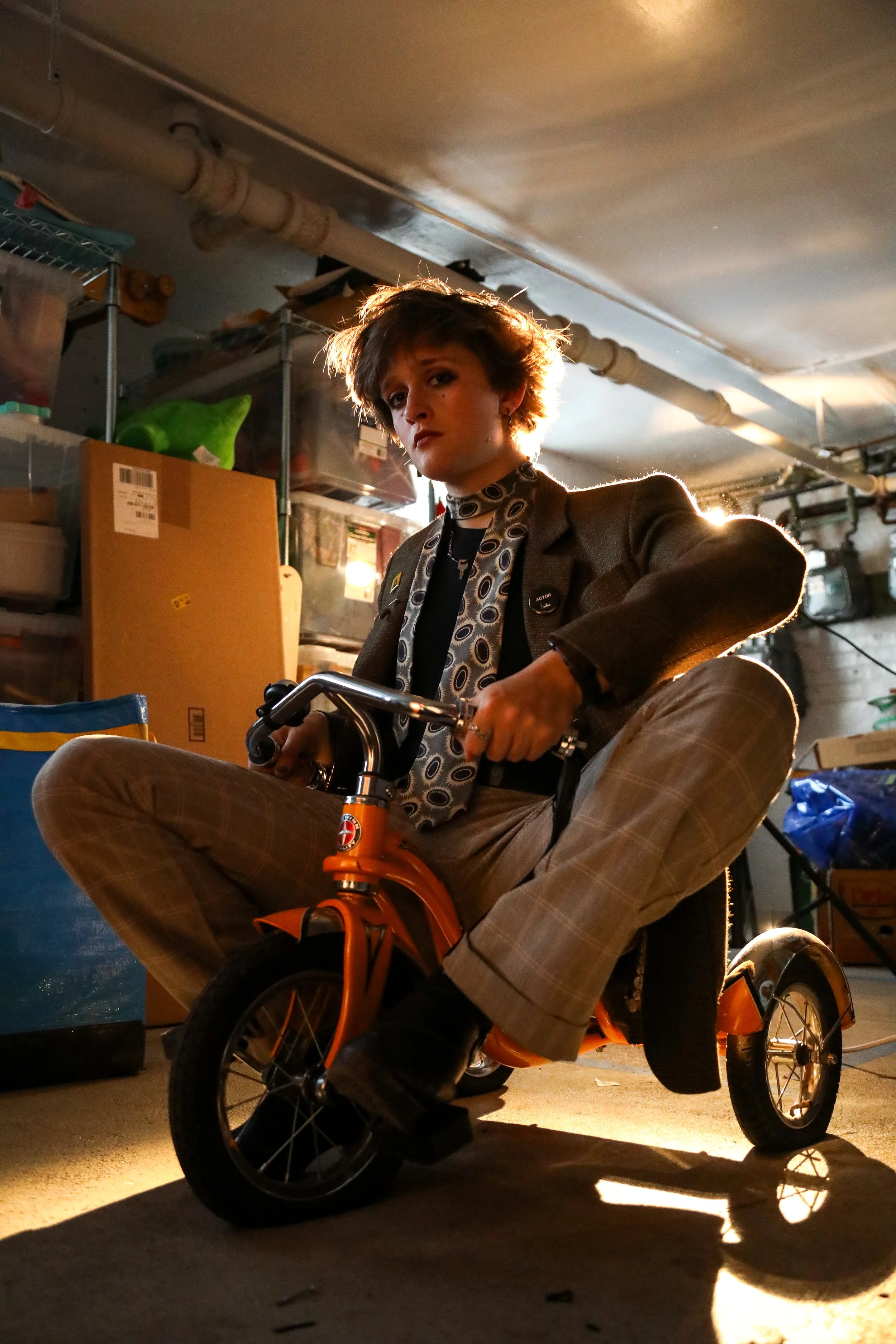
Special thank you to the talented MacGregor Salmon for their portraits of Lily McCauley. We encourage you to follow Salmon’s full body of work at @01_mac_heic and @macgregor_salmon_ on Instagram.
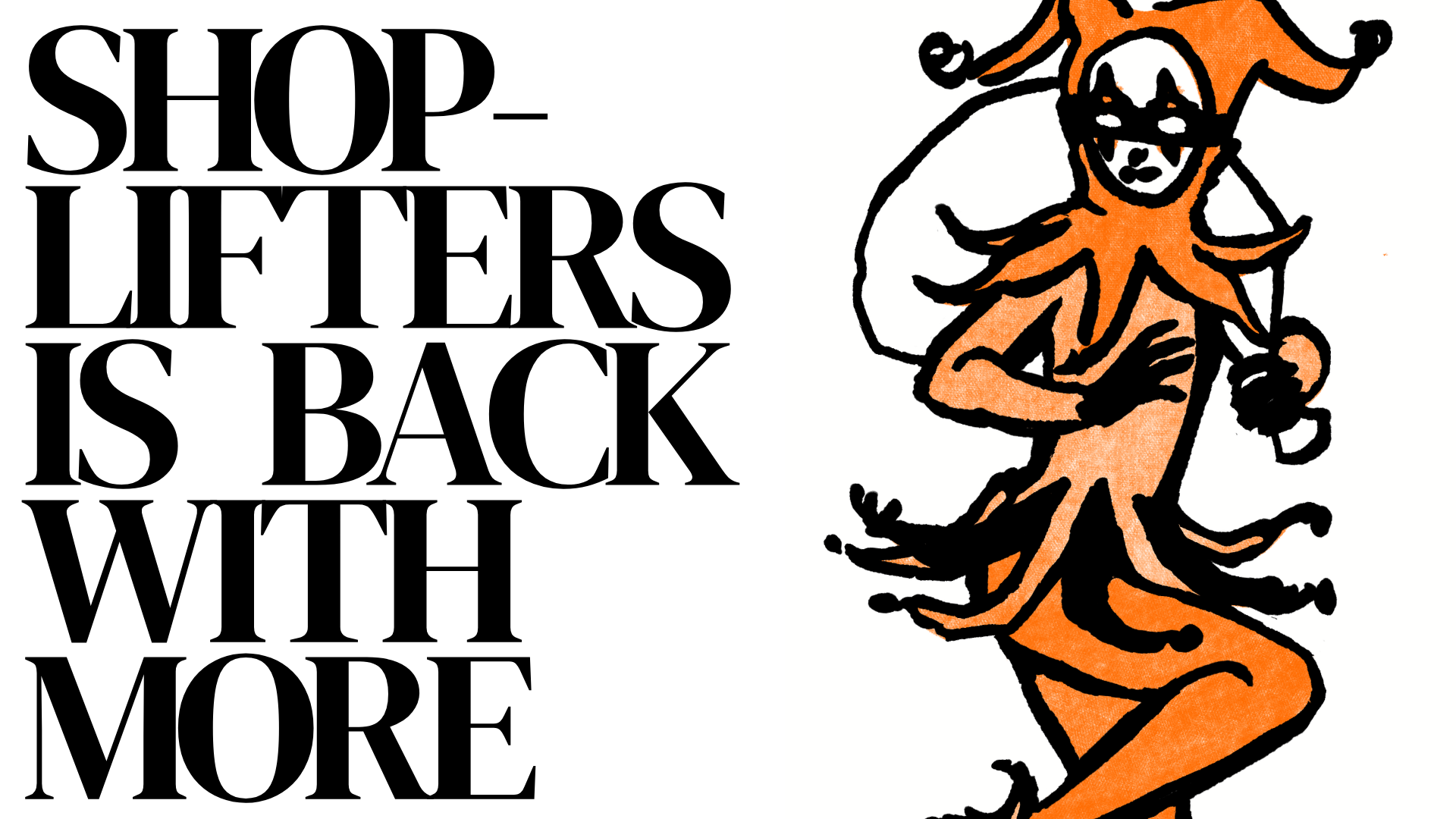
You may have noticed that, for the month of June, we took time away from public releases. That is in large part because of an exciting shift in the Shoplifters paradigm—we’ve brought onboard four new crew members, and they’ve been busy.
Before we get into everything else, let’s walk you through the new team at Shoplifters.
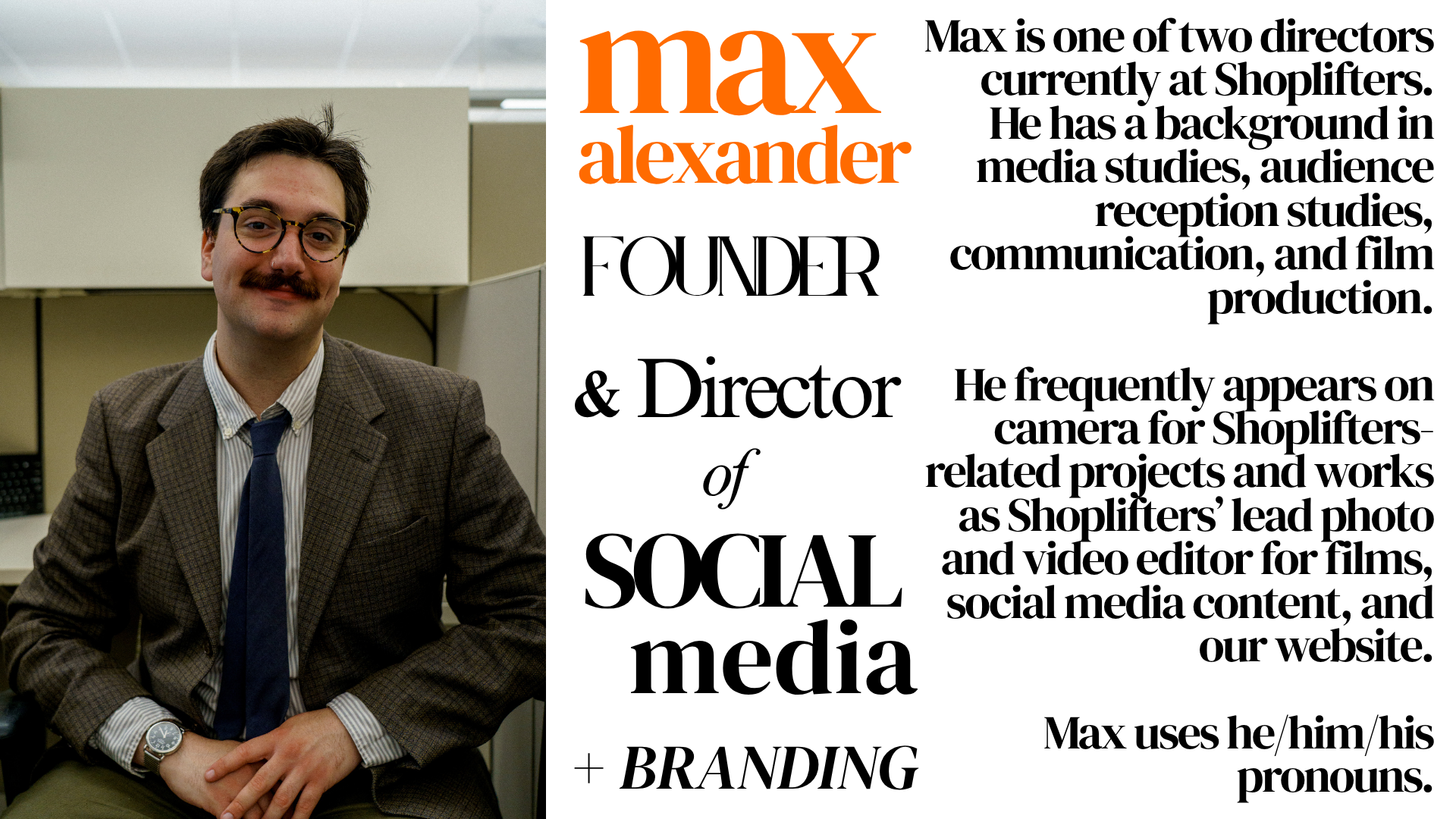
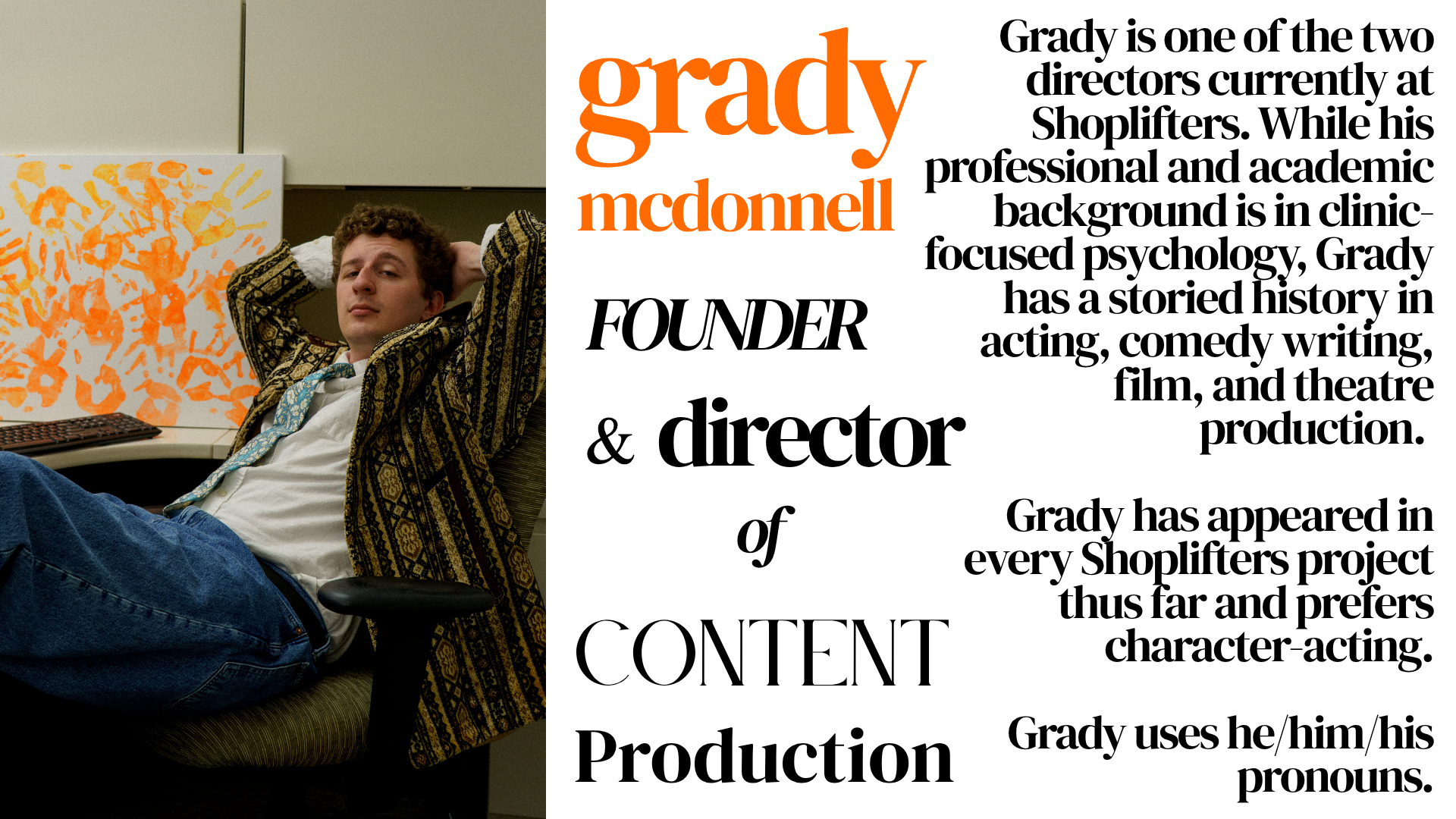
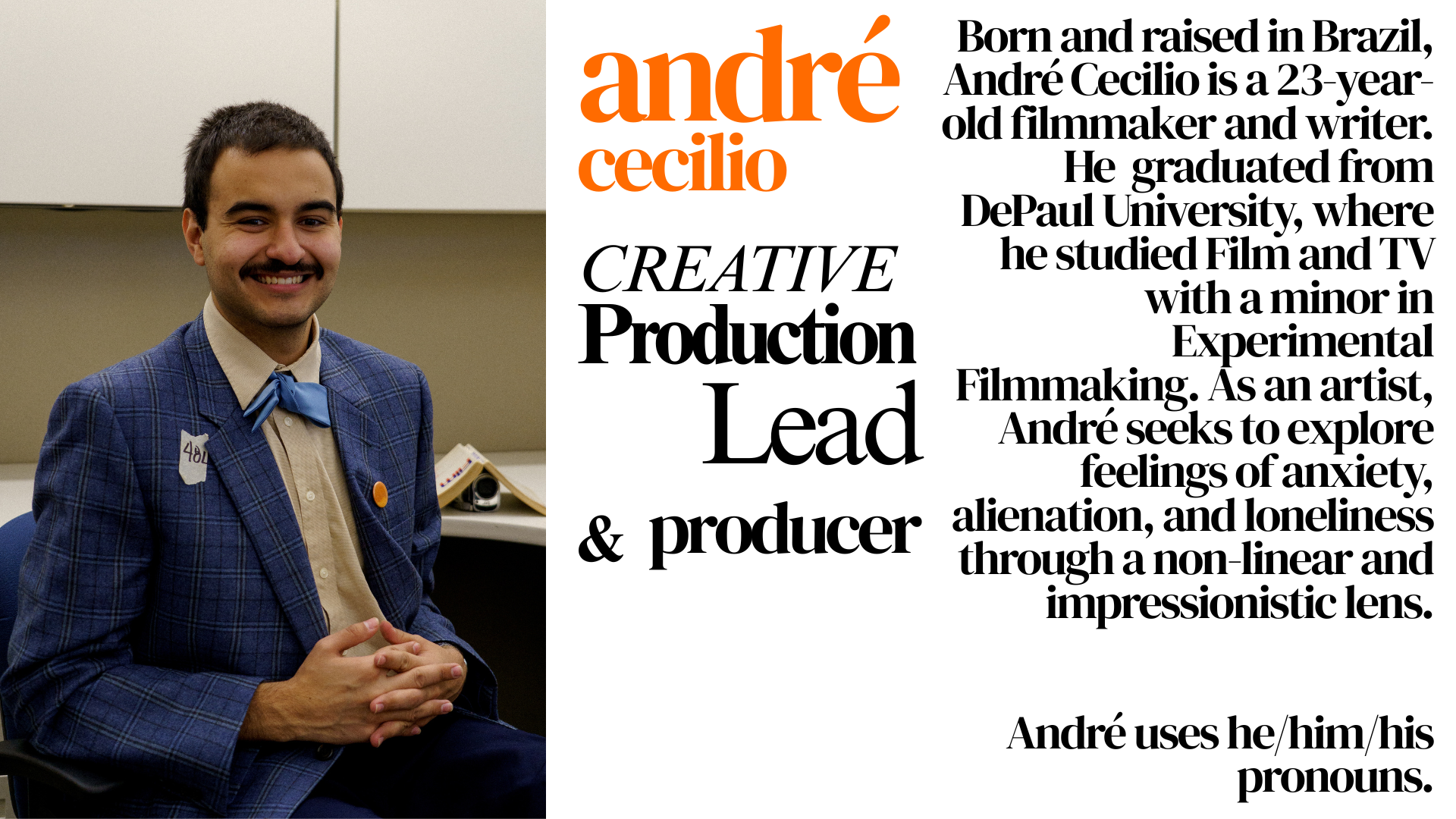
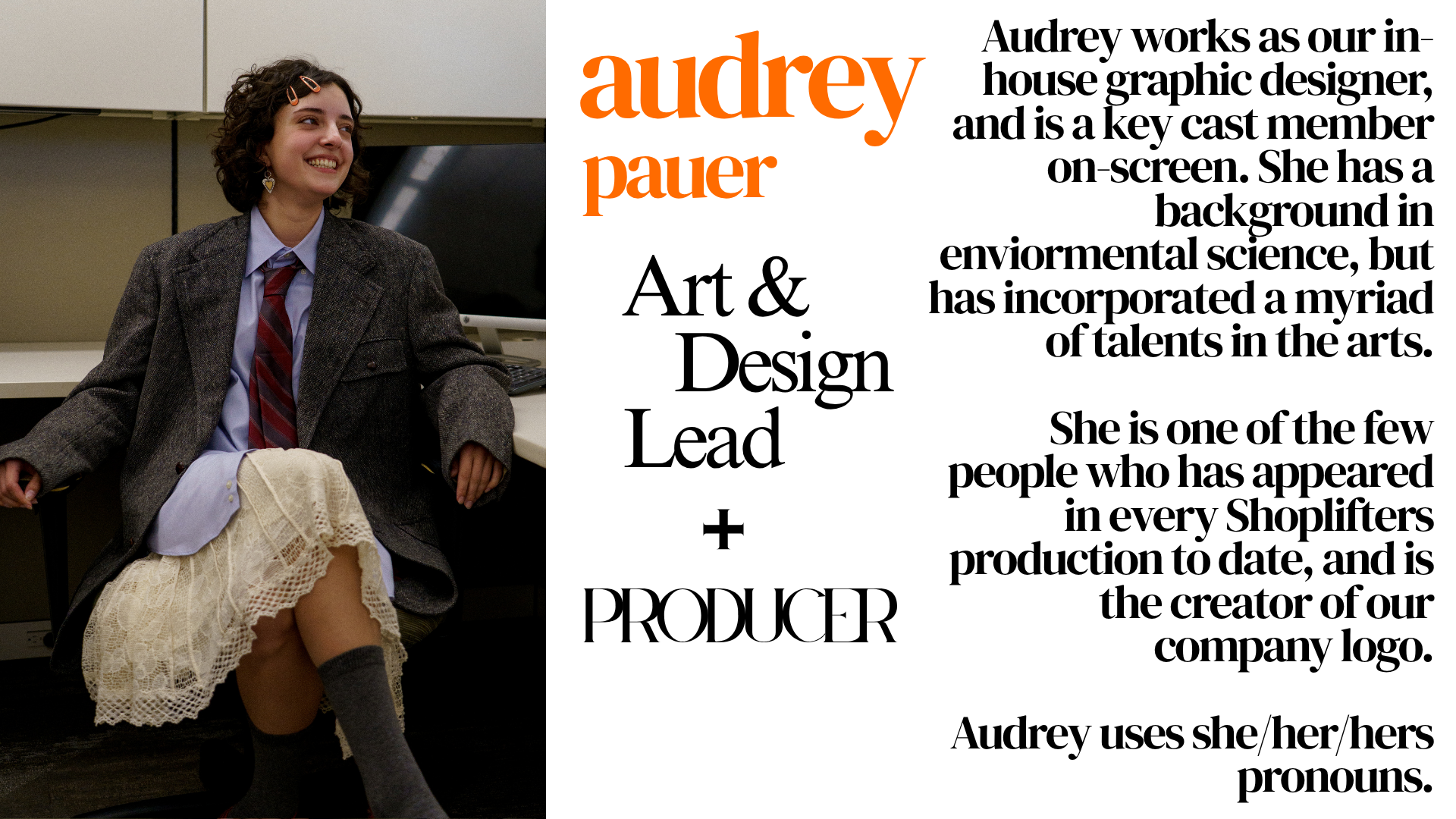
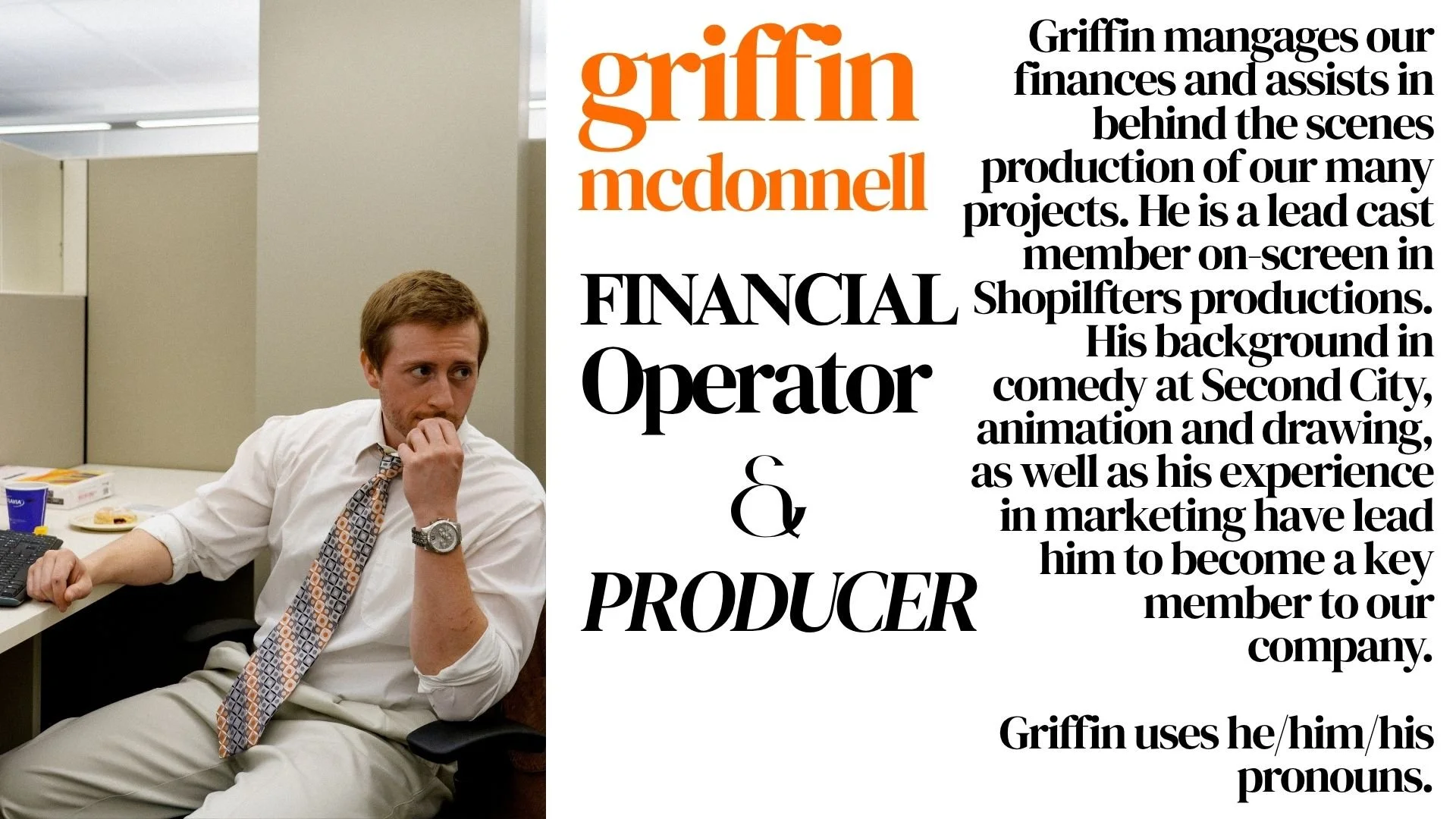
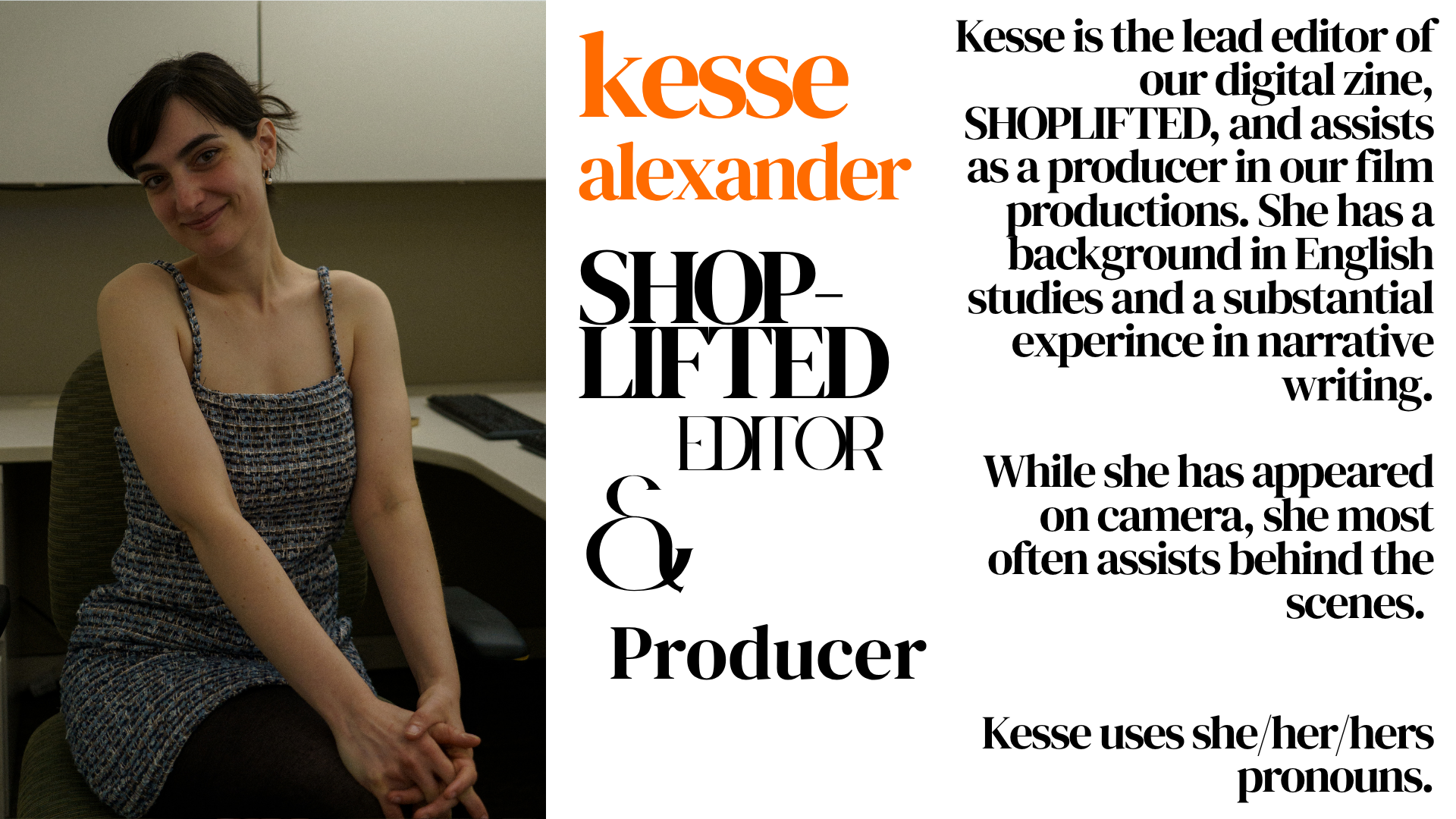
These are almost certainly familiar faces for anyone that’s seen a Shoplifters short film. Everyone you see has appeared (and will continue to appear) on camera for our work—now, they’ll also have a more substantial role in the phases of pre- and post-production.
We’ve already begun incorporating the team in these processes. Later this month, you’ll see the fruits of our labor in a brand new Off-Seasons short called “The Real Baristas of Cook County,” which we’re all quite pleased with thus far. That one is looking special.
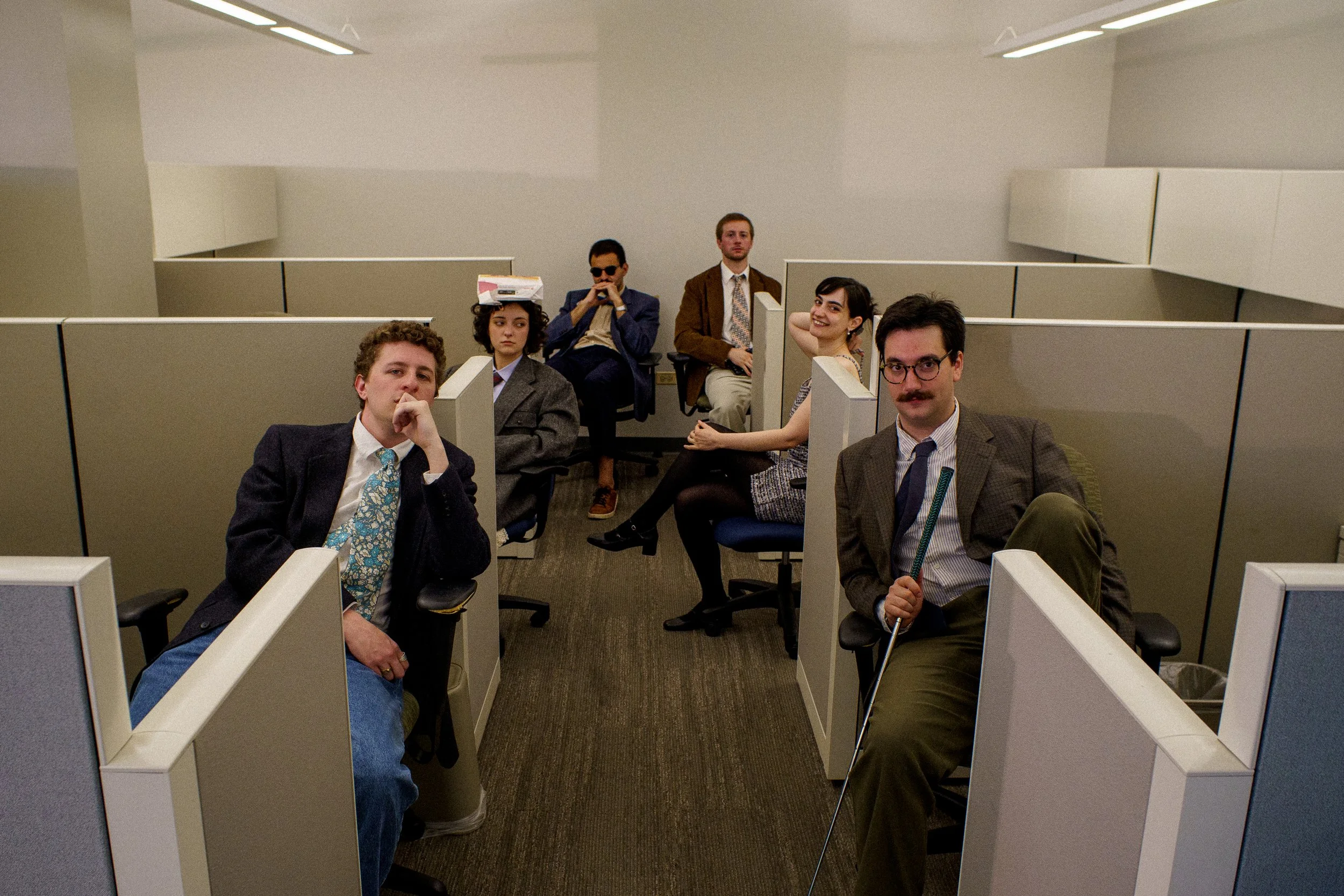
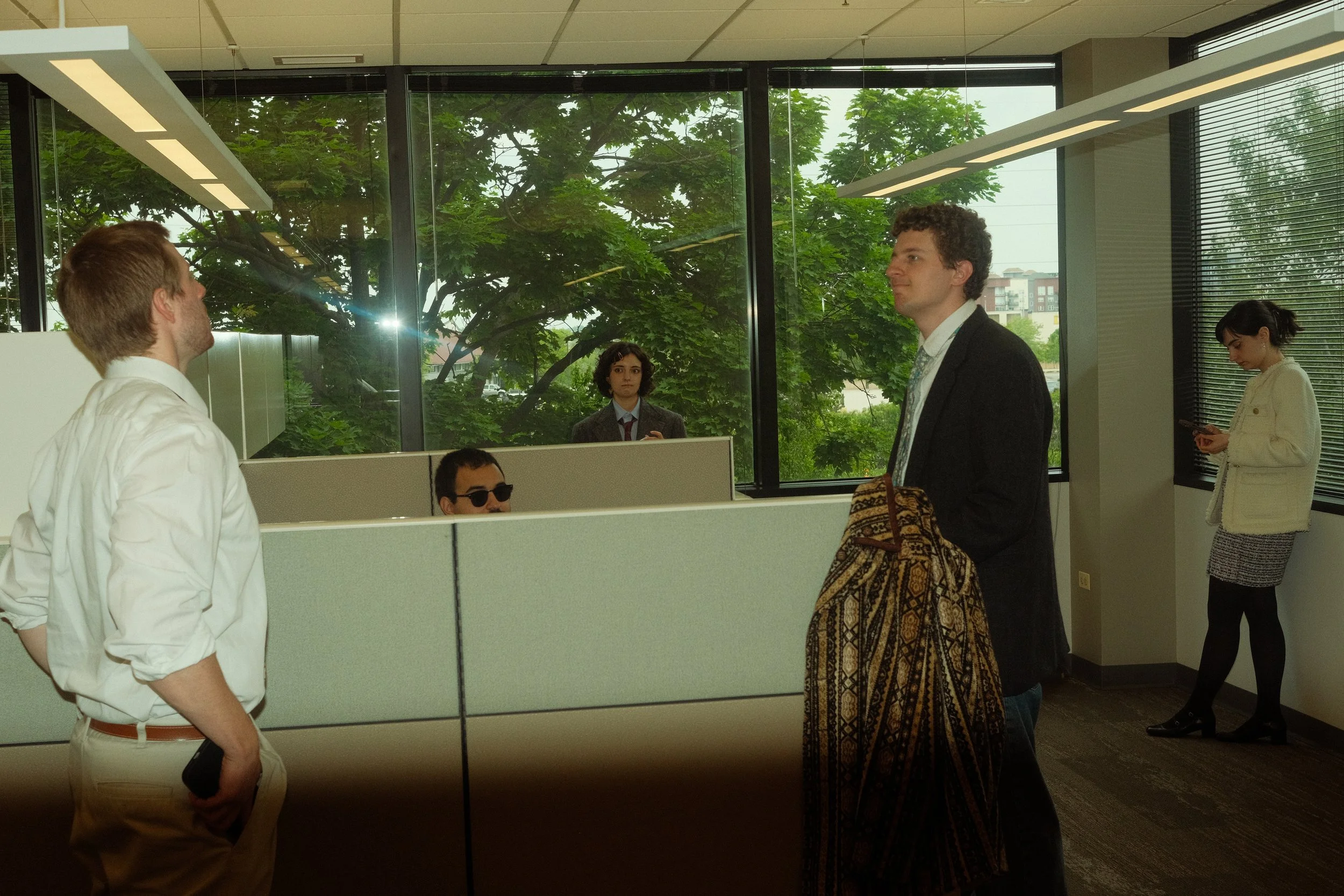
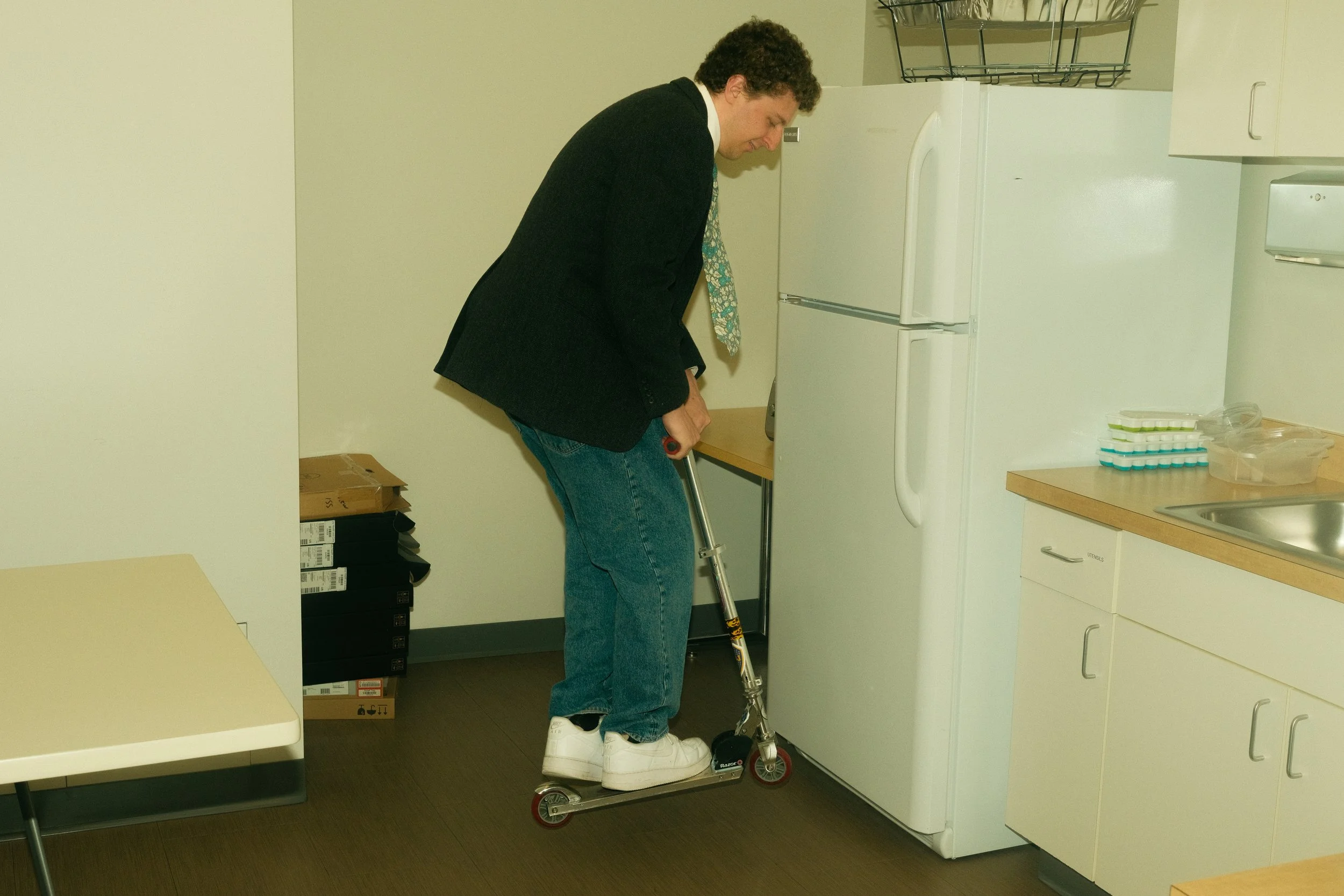
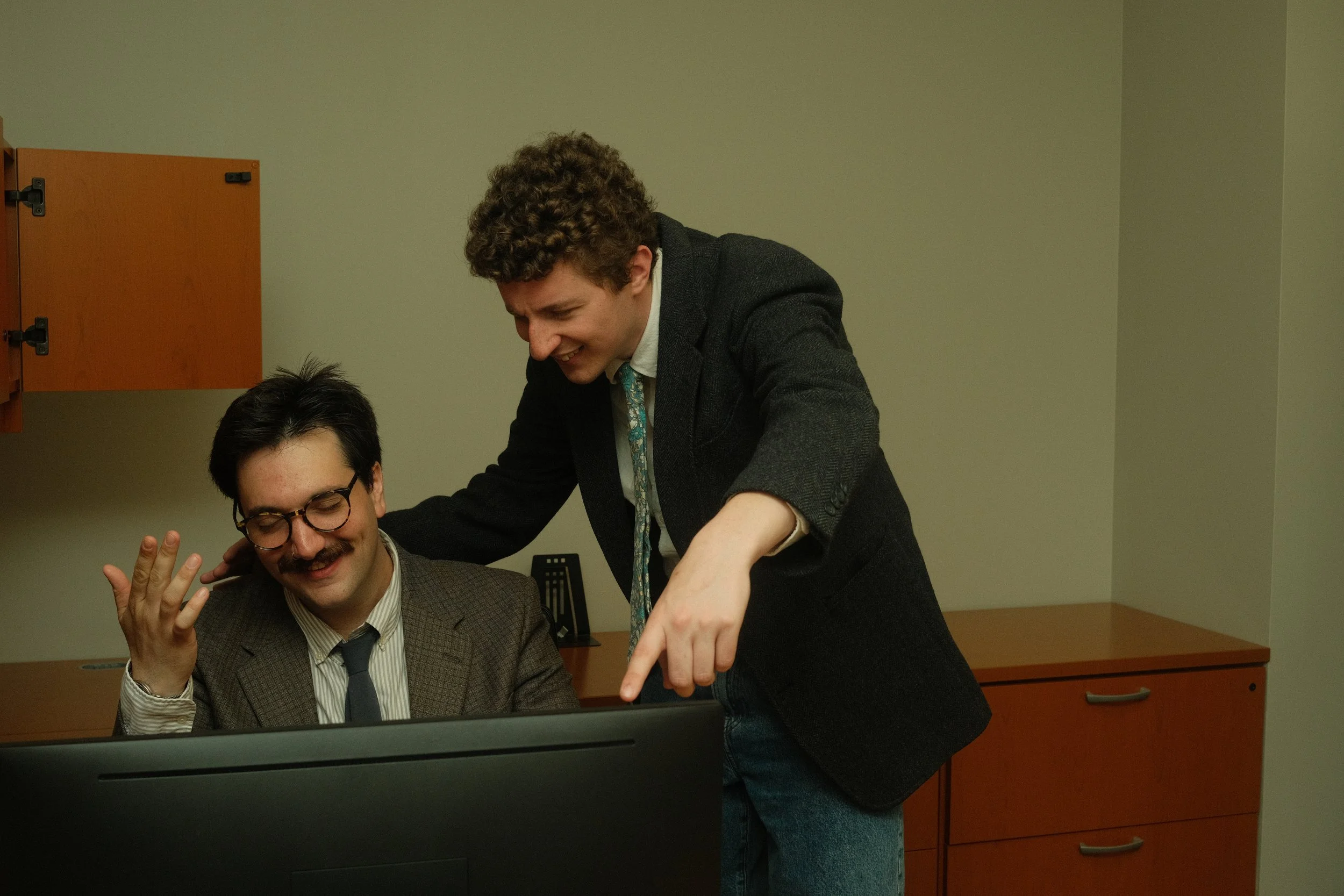
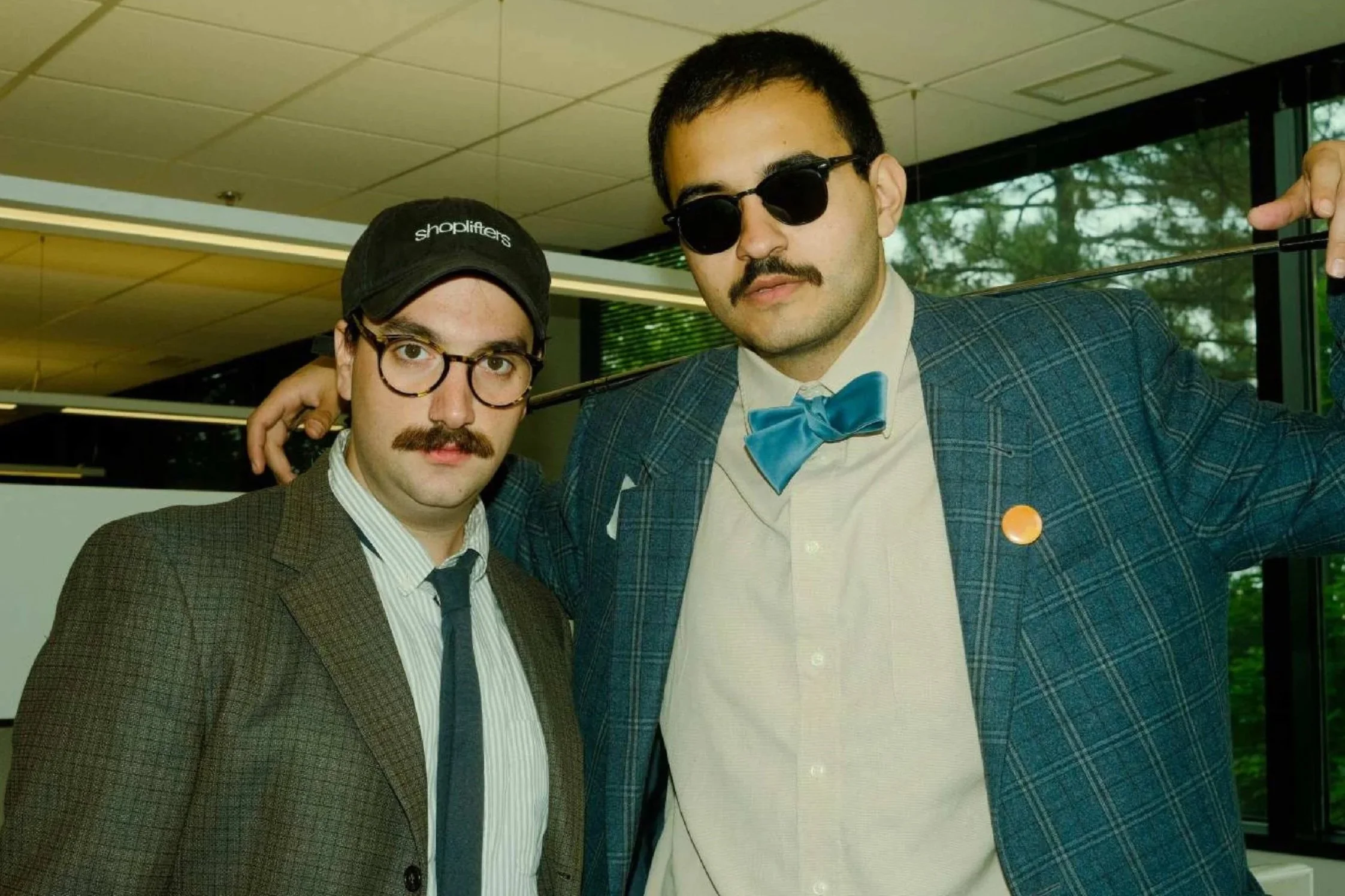
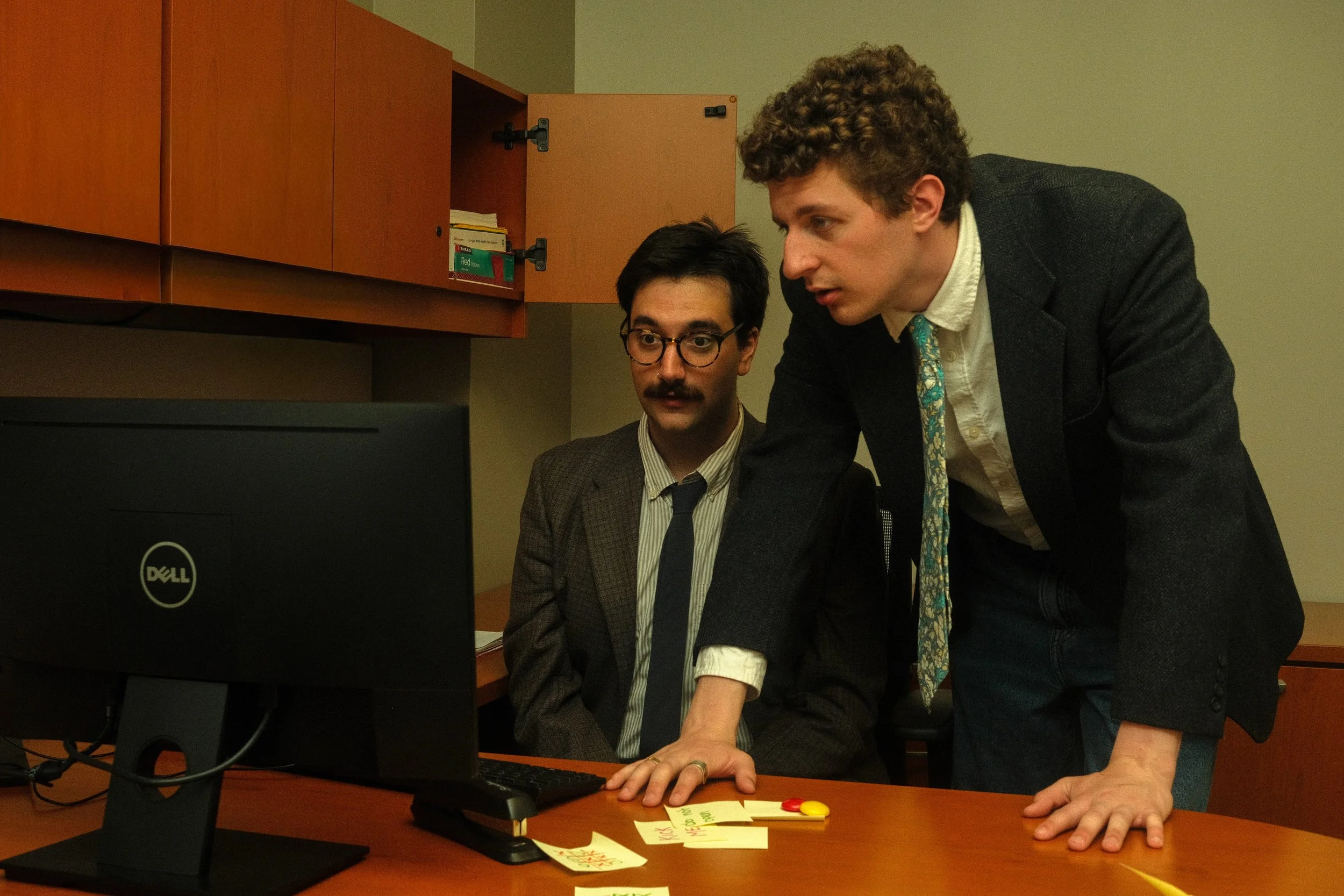
Moreover, just about everyone at Shoplifters has been involved in shooting The KO Show, an experimental spin on late-night television led by the team at Tokon. We’re excited to share more on that collaboration—and a few others—in the future.
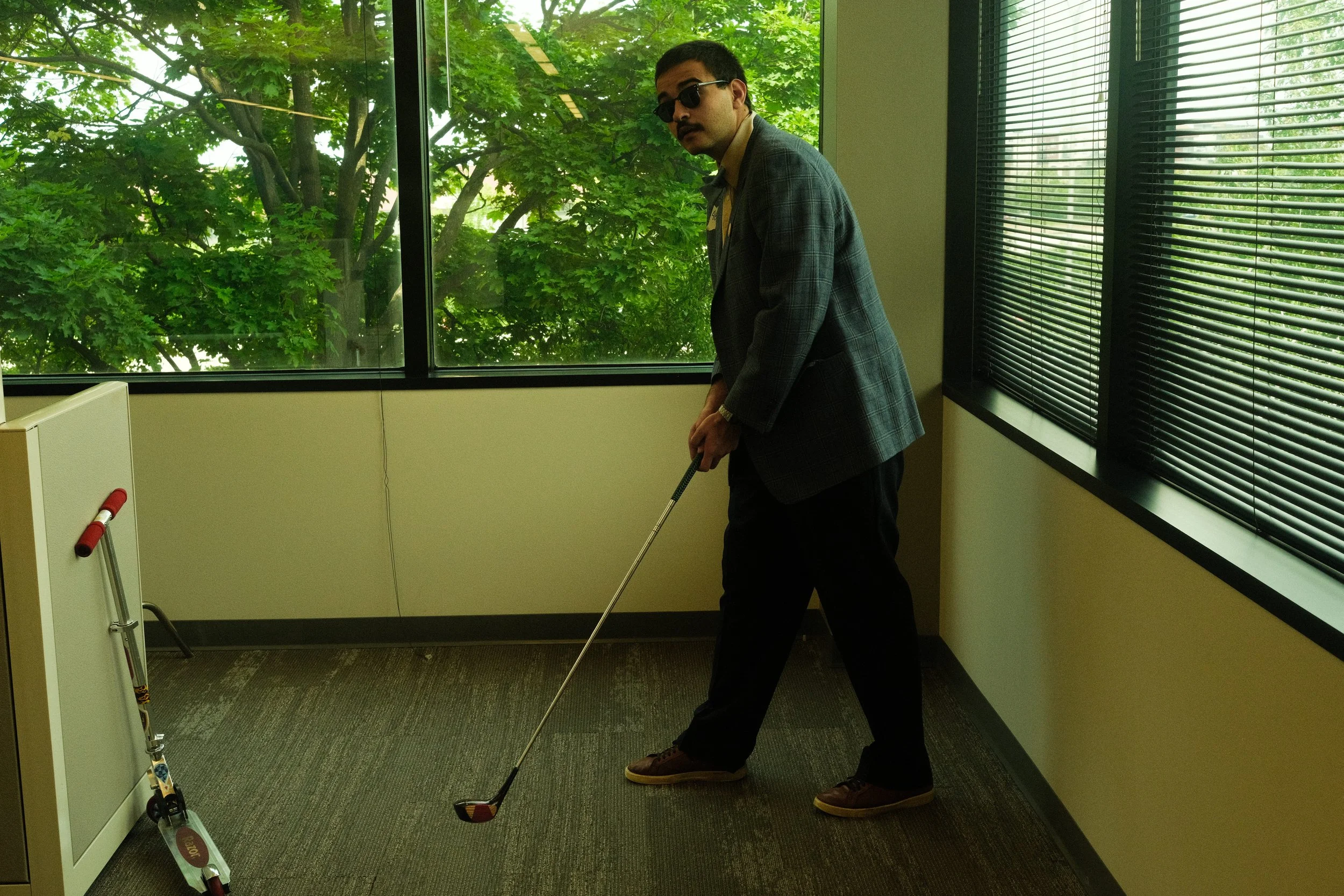
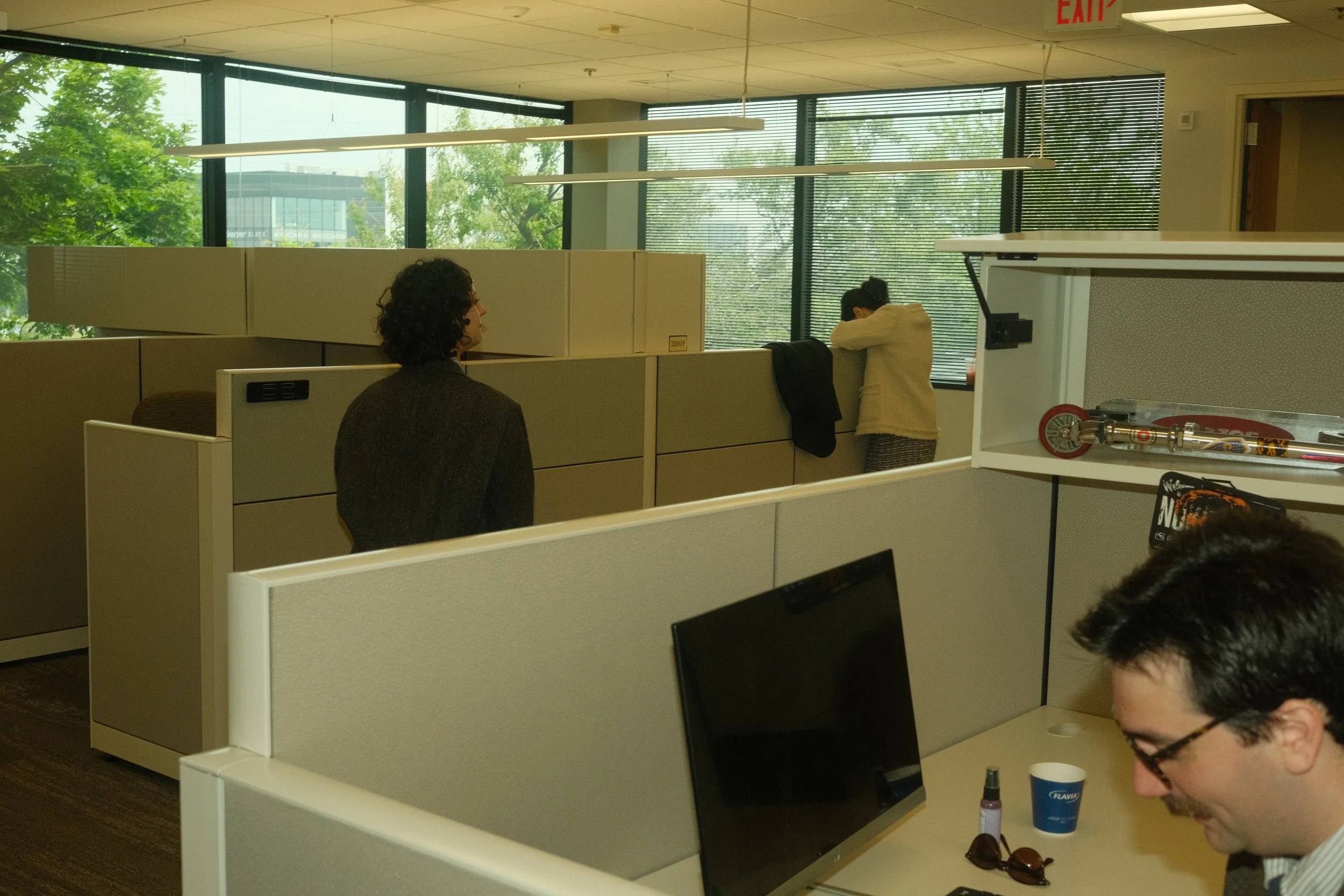
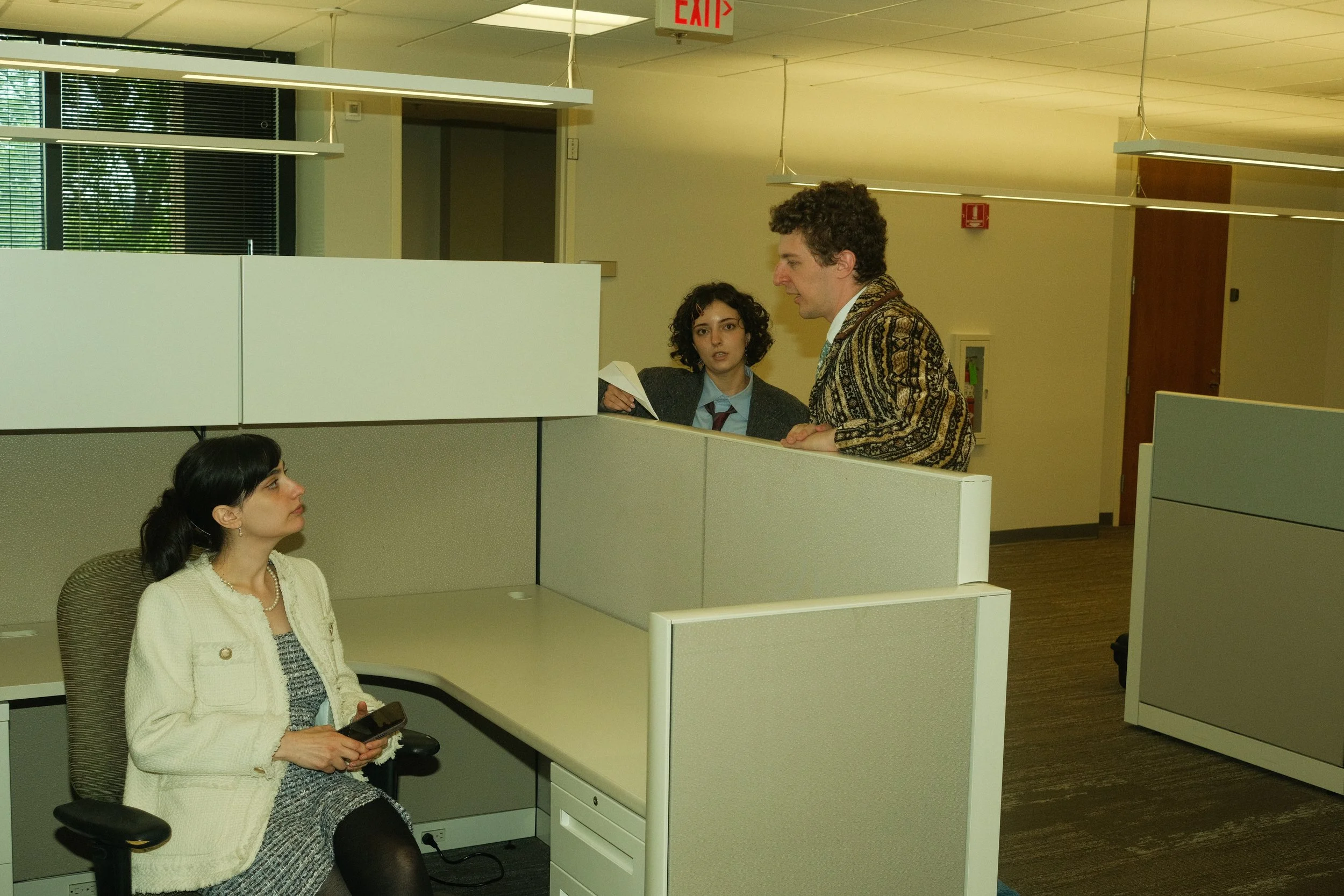
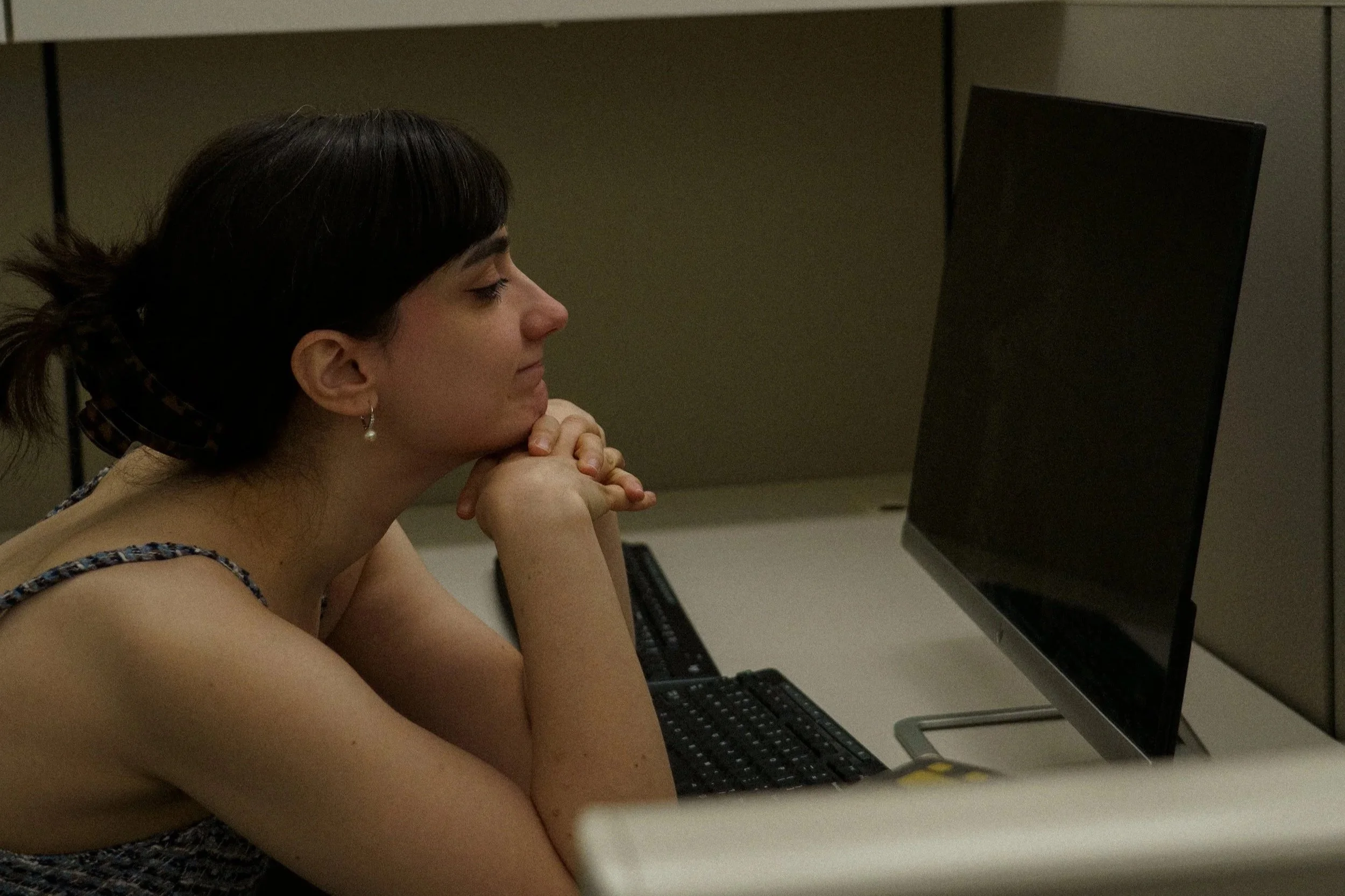
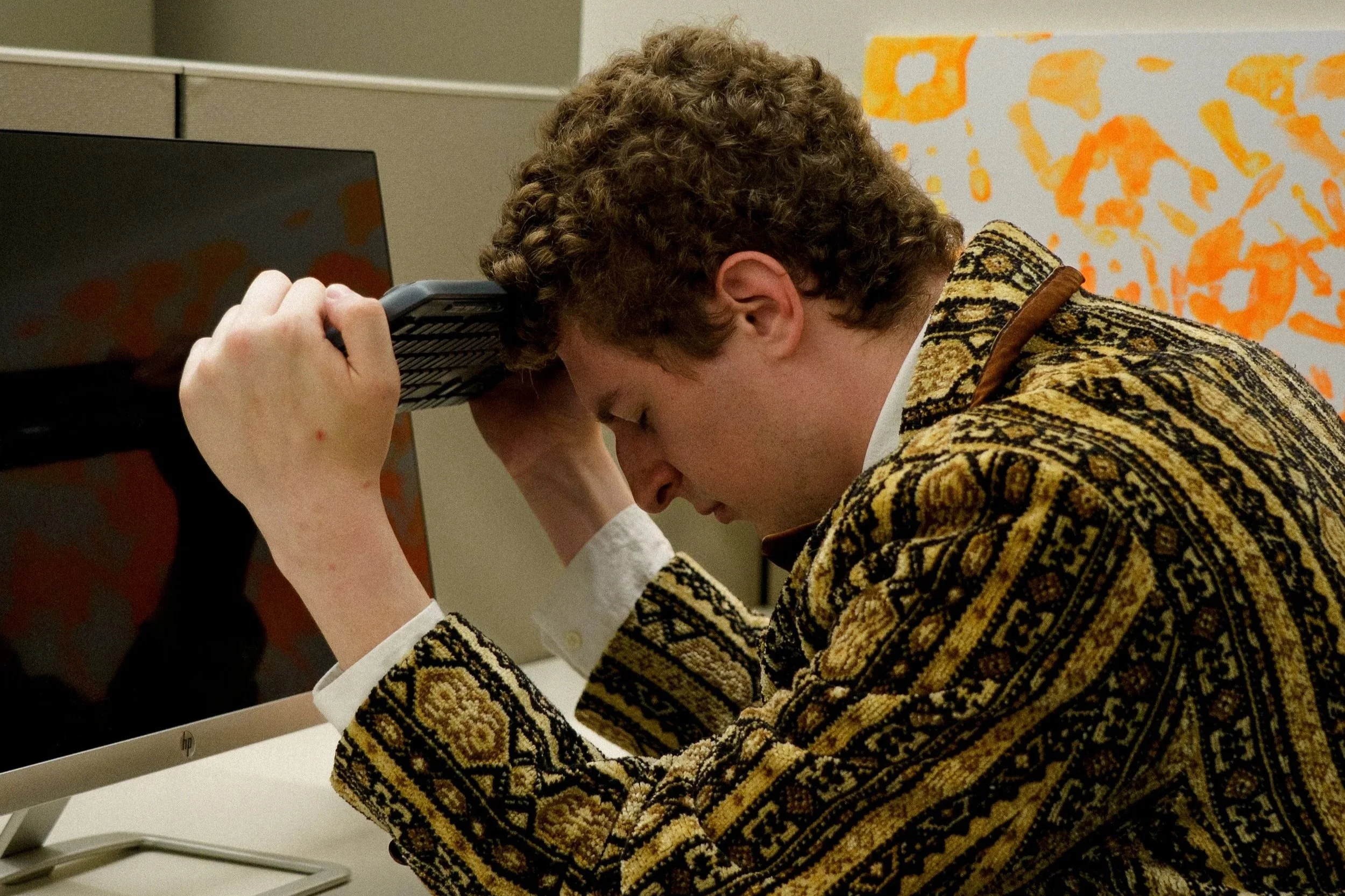
“Officelifters” series shot by Jackson Harkins
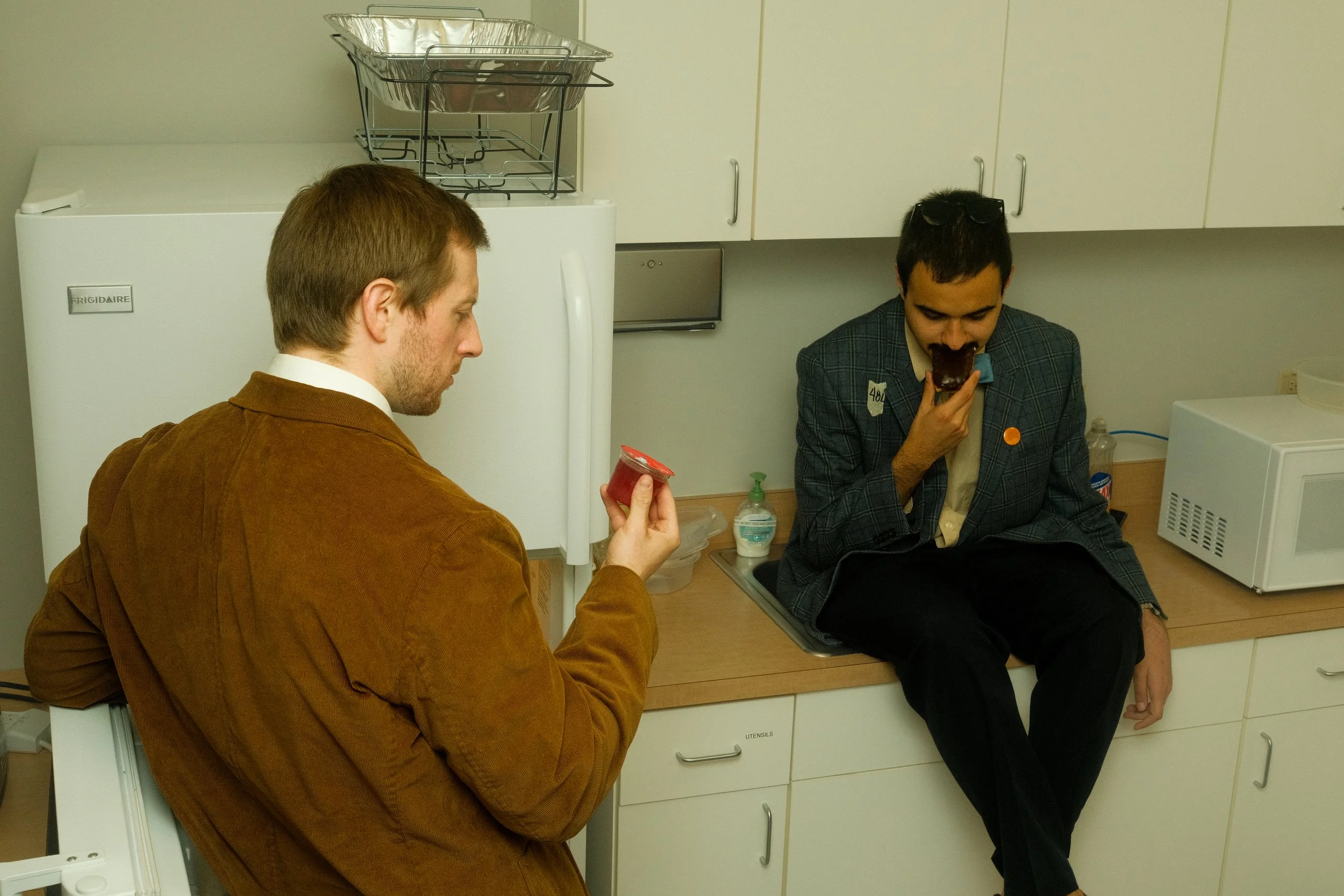
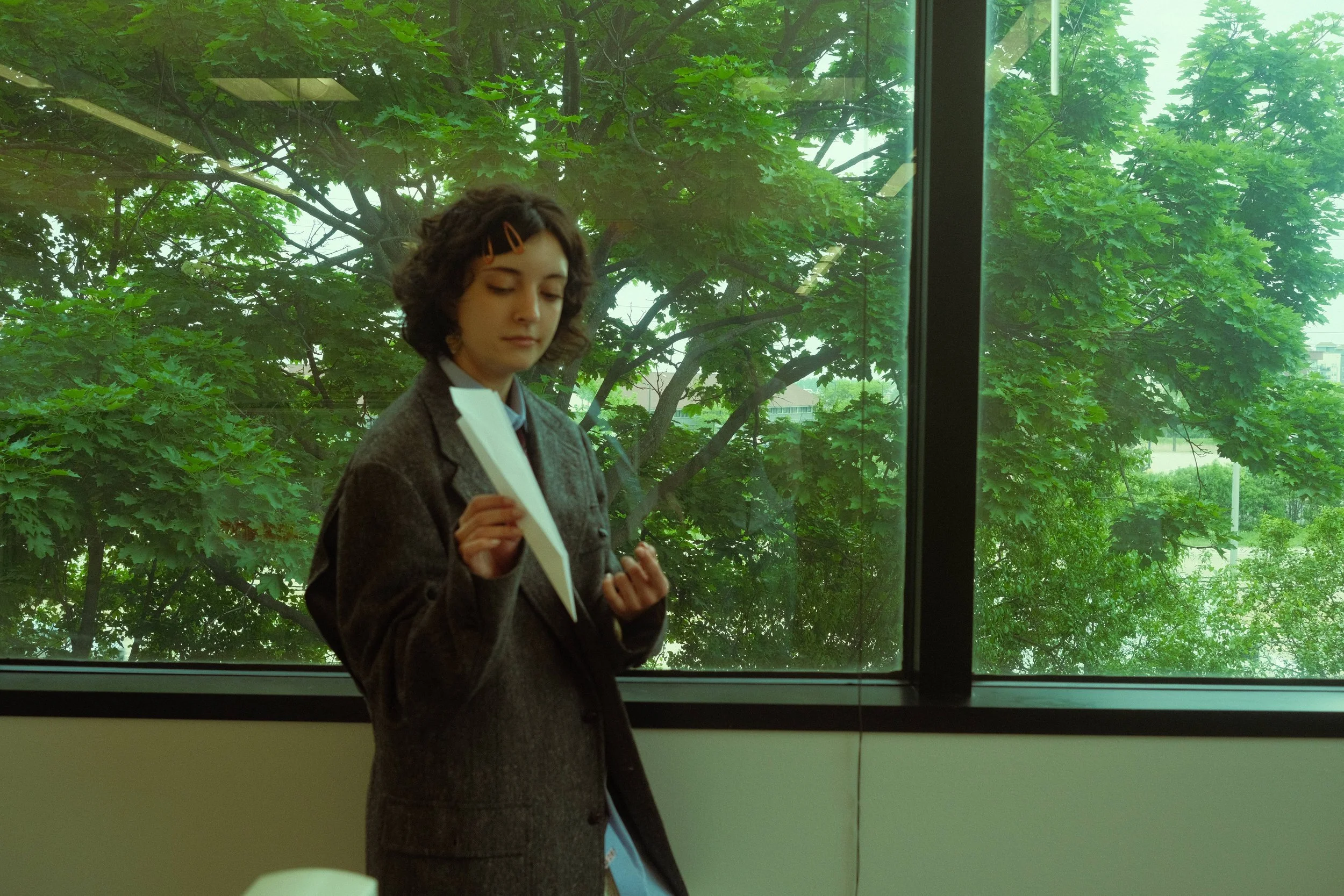
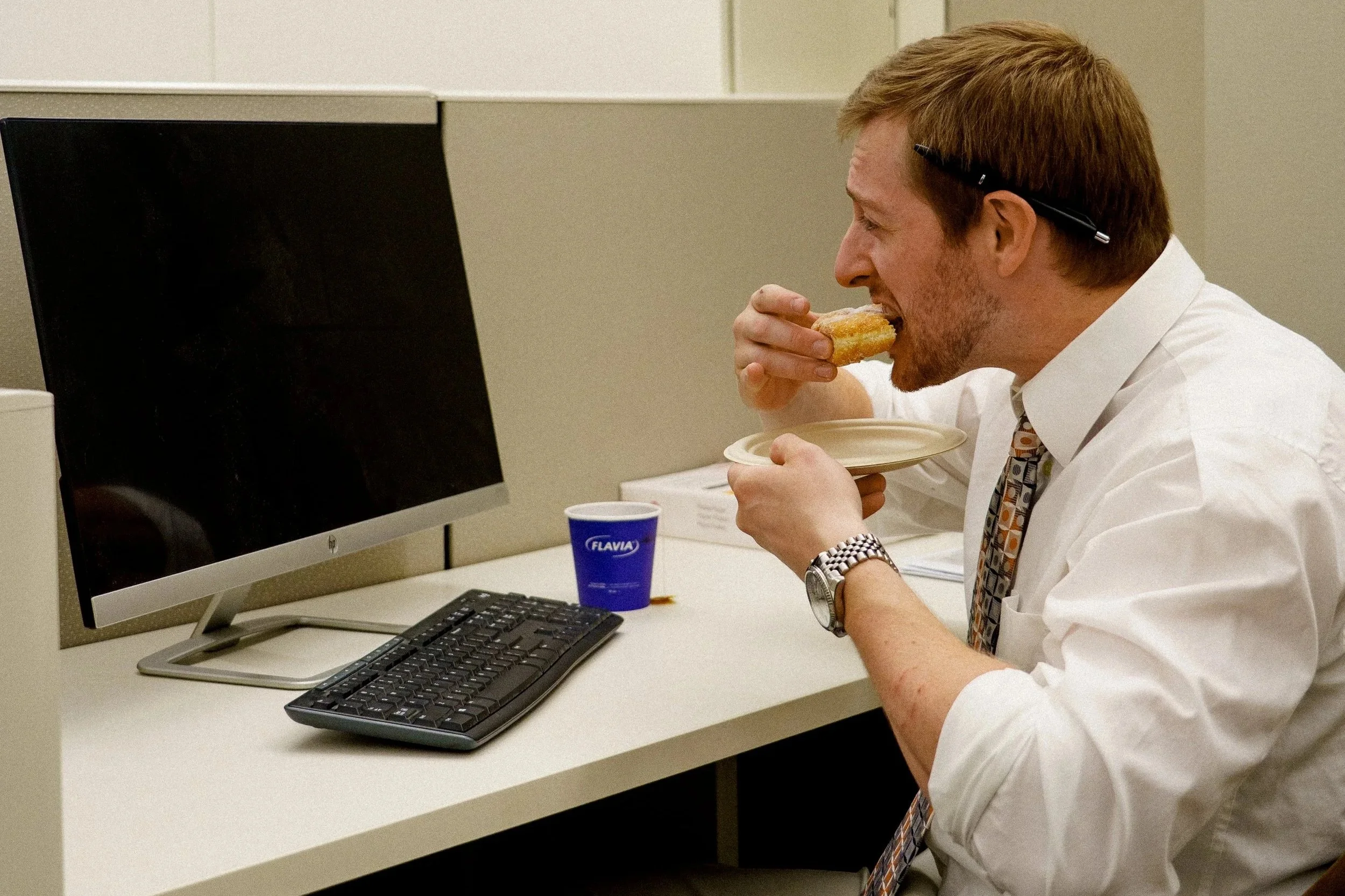
We’ve got an excellent slate of projects in the pipeline, spanning both genre and form. It’s all being helmed by a beautiful team of creatives, both in-house at Shoplifters and with our most trusted collaborators. We’re bursting at the seams waiting to tell you everything; for now, just look at this amazing new logo from Audrey Pauer, Art & Design Lead at Shoplifters.
joke of the month